The most effective dove-proof feeders combine small ports (under 3/8 inch in diameter), short or no perches, and weight-sensitive closing mechanisms that shut off access when anything heavier than a small songbird lands. Lyric Wild Bird Food notes that mourning doves naturally feed heavily on the ground, which makes tight landing and perching spaces important for dove-proofing. Mourning doves weigh around 112–128 grams, which is 3 to 4 times heavier than most finches or chickadees, so any feeder designed around weight thresholds does a surprisingly good job of locking them out without touching your target birds. Pair that feeder design with the right seed (no millet, no cracked corn on the ground) and smart placement, and you can cut dove visits by 80 to 90 percent within a week.
Best Dove-Proof Bird Feeders: Prevent Waste and Pests
Why Doves Keep Taking Over Your Feeder
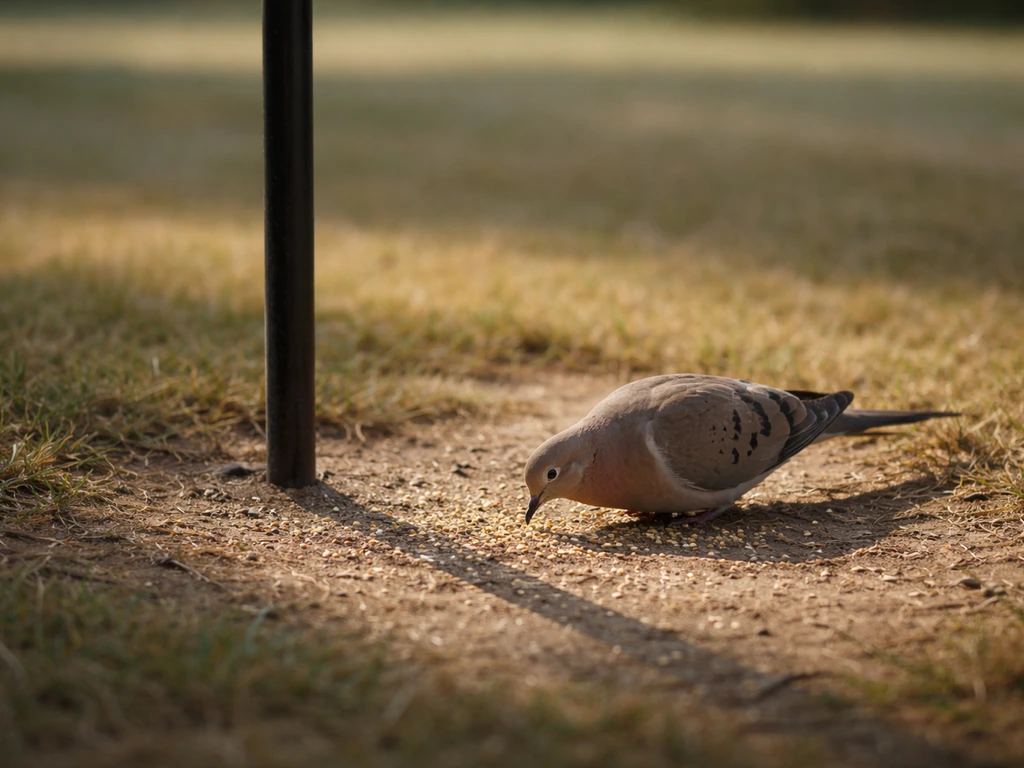
Mourning doves are ground foragers first. Mourning doves commonly perch and also forage on the ground, which is why an open platform can attract them so readily blank" rel="noopener noreferrer">doves forage on the ground. In the wild they spend almost all their feeding time on open fields and prairie ground, picking up grass seeds, millet, and small grains. Your feeder, especially a platform or hopper with an open tray, looks exactly like a foraging bonanza to them. Unlike a nuthatch or a chickadee that will dart in, grab one seed, and leave, doves settle in and eat continuously, often in pairs or small groups, and they'll hog the tray for 20 to 30 minutes at a stretch.
The real problem is that most standard feeders weren't designed with doves in mind. Wide perch rings, open platforms, and broad ledges are basically a welcome mat for a bird that naturally lands flat and feeds from a stable surface. Add mixed seed blends with millet and cracked corn (both dove favorites), and you've created an irresistible combination. The good news: doves struggle badly with tight spaces, angled perches, small ports, and feeders that sway or close under weight. Lean into all of those design features and the doves self-select elsewhere, usually to the ground below your feeder, which you can also manage.
One important nuance: "dove-proof" doesn't mean the same thing as squirrel-proof or rat-proof. Squirrel deterrence focuses on weight thresholds and cage sizing. Dove deterrence focuses on perch geometry, port size, and ground access control. You can have a feeder that's excellent against squirrels but completely open to doves, so it's worth checking both criteria if you're dealing with multiple pests. The same goes for pigeons, which share similar foraging habits to doves and respond to very similar countermeasures. A best pigeon proof bird feeder uses the same kind of port limits and access control to deter larger ground-feeding visitors The same goes for pigeons.
What Makes a Feeder Actually Dove-Resistant
There's no single magic feature, but a combination of four design elements will stop most doves most of the time. Here's what to prioritize when you're reading specs or standing in a store:
Port size and throat opening
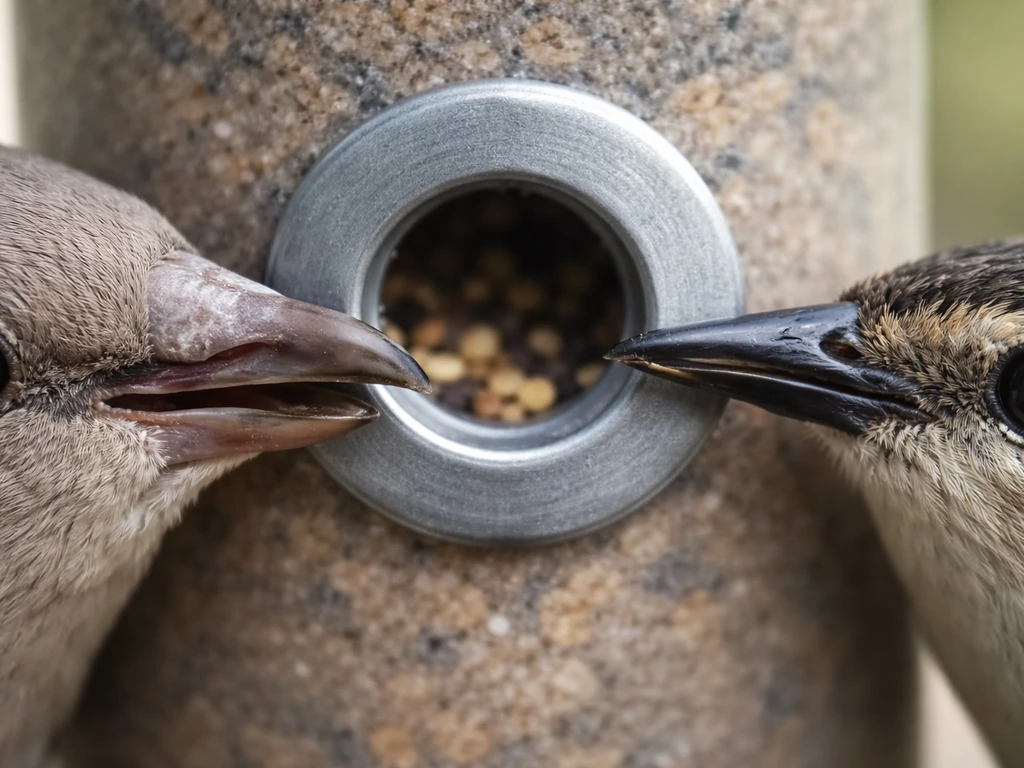
Dove beaks are wider and blunter than most songbird beaks. Ports under 3/8 inch in diameter make it mechanically difficult for a dove to extract seed efficiently, while most finches, chickadees, and nuthatches feed through them without any trouble. Tube feeders with tight ports are your best friend here. Measure any feeder you already own: if the port is larger than 1/2 inch in diameter, doves can work it. If it's on a platform or has an open seed tray, no port measurement matters because doves just eat directly from the surface.
Perch design and landing geometry
Doves need a stable, flat, horizontal surface to settle and feed. Short dowel perches (under 1.5 inches) angled slightly downward, thin wire perches, or no perches at all make them uncomfortable enough that they'll give up and leave. The bird species you actually want (finches, titmice, chickadees, nuthatches) are acrobatic enough to cling to a tube feeder with no perch or grip a thin wire without trouble. Avoid any feeder with a wide circular perch ring or a broad shelf under the seed tray.
Weight-sensitive closing mechanisms
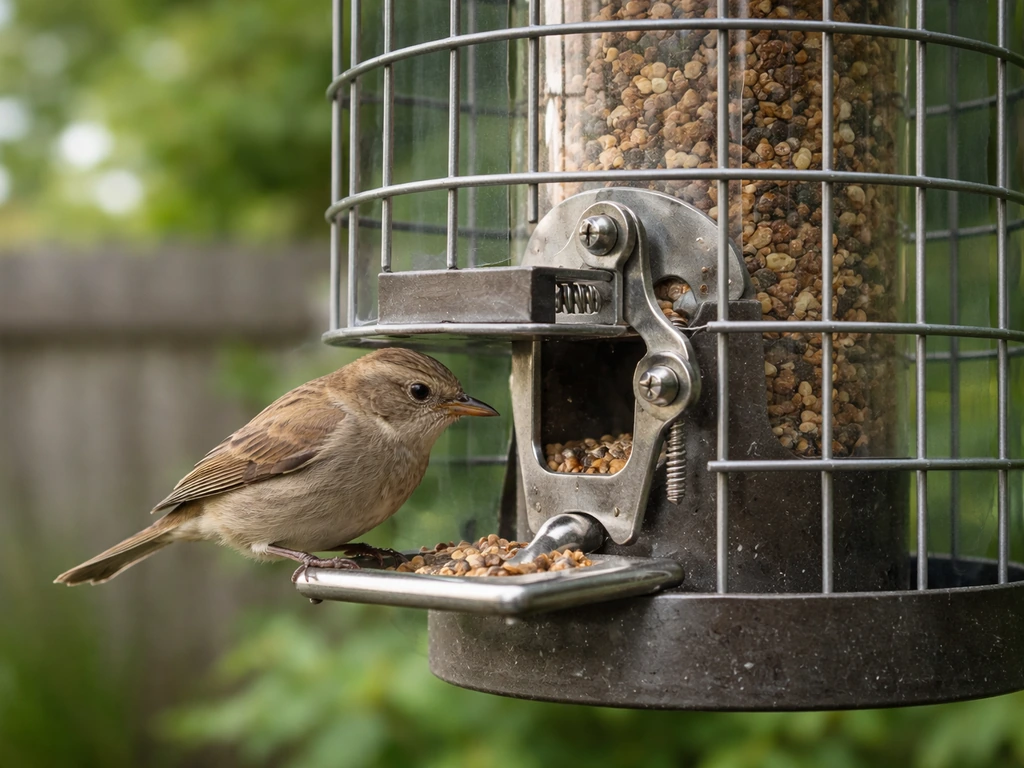
Spring-loaded or counterweight shutoff systems close the seed ports or drop a cage sleeve down when a bird above a set weight lands. Most quality adjustable models can be calibrated to close at around 60–75 grams, which blocks doves (112–128 g) but leaves finches and chickadees (12–25 g) completely unaffected. These systems also work against squirrels and larger pest birds like grackles and starlings. If dove control is your primary goal, this class of feeder gives you the most reliable result across seasons.
Cage surrounds and shroud designs
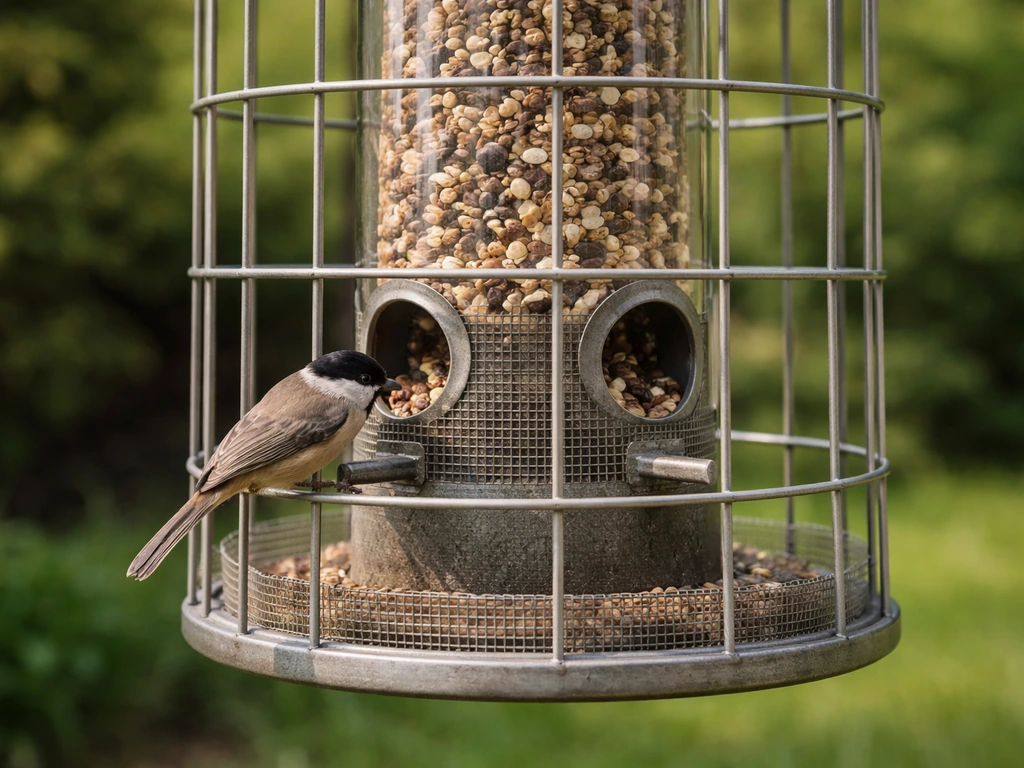
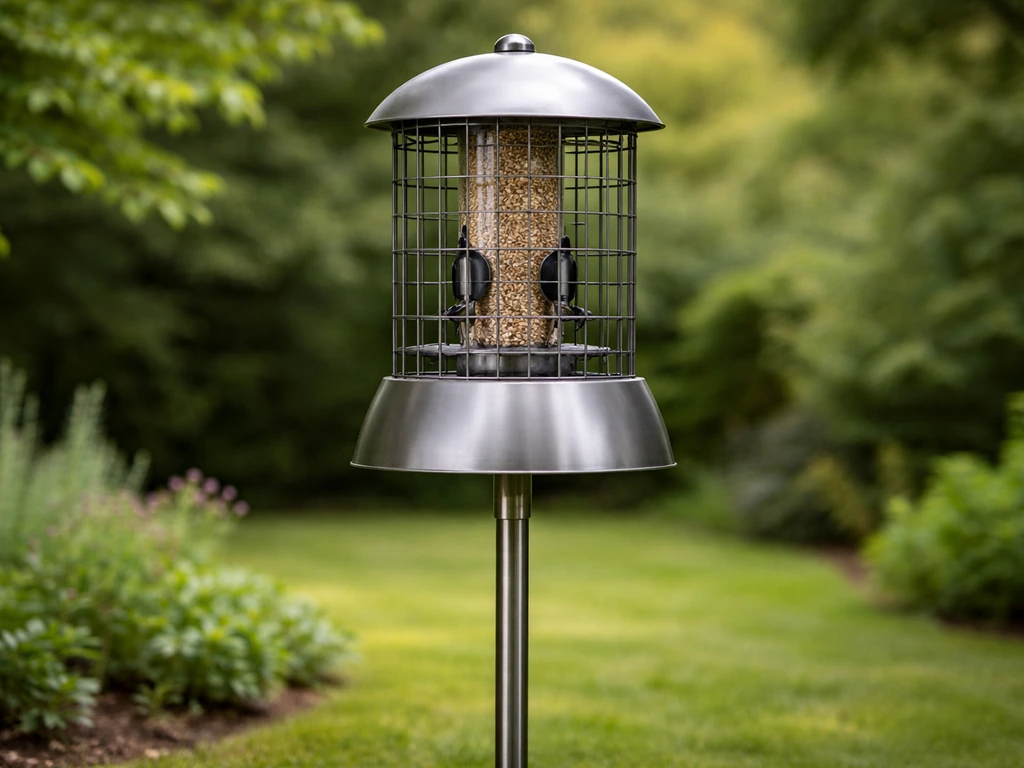
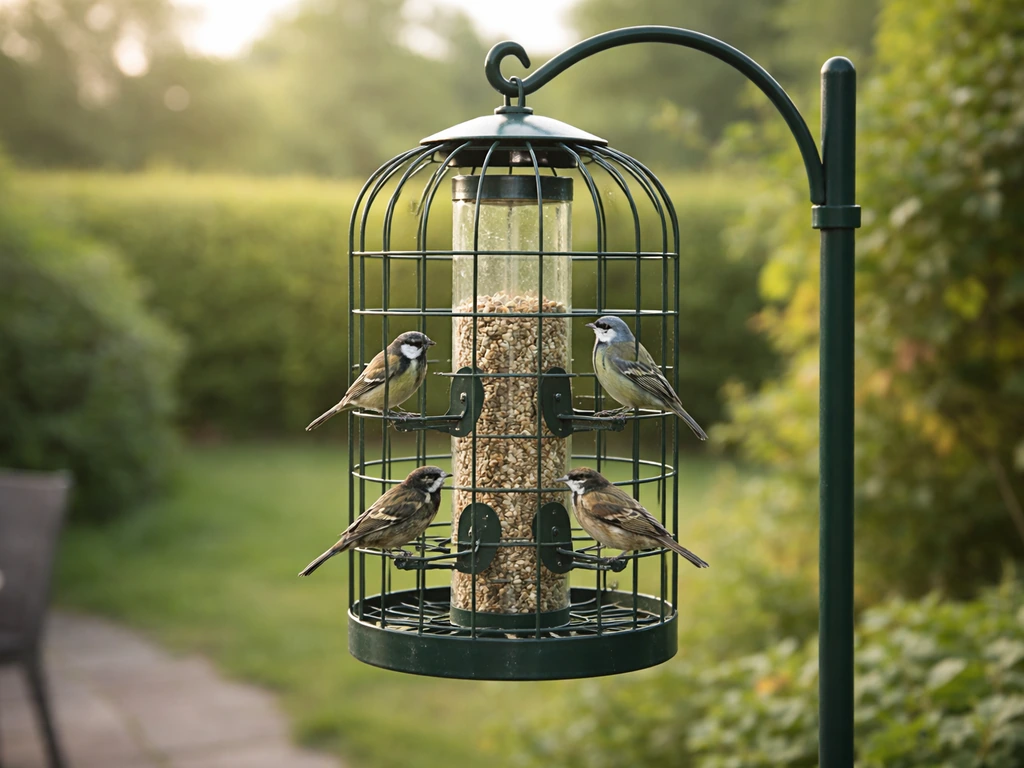
Wire cage surrounds (also called caged feeders) place a metal grid around a tube feeder with openings typically 1.5 by 1.5 inches. Small songbirds pass through freely; doves and larger birds can't get inside. This approach has zero mechanical parts to break and works rain or shine, but the cage spacing must be correct. If the gaps are too large (2+ inches), doves can fit through. Check the gap measurement, not just the product marketing copy, before you buy.
Best Dove-Proof Feeder Picks by Type and Target Bird
Different feeder types come with different strengths against doves. Here's how to think about each one, with specific recommendations based on which birds you're trying to attract.
Tube feeders (best all-around pick)
A quality tube feeder with small ports and short perches is the single best starting point for dove deterrence. Look for models with ports under 3/8 inch and perch dowels no longer than 1 inch. Add a cage surround (many brands sell these as accessories) and you get two layers of protection. Best for: finches, chickadees, titmice, nuthatches. Top pick characteristics to look for: UV-stable polycarbonate tube, metal ports (not plastic, which doves can widen by chewing), removable base for cleaning, and cage grid spacing of 1.5 inches or less. Weight-sensitive tube feeders like the Brome Squirrel Buster Plus series (adjustable weight threshold) and caged tube feeders like the Stokes Select cage feeder are solid options in this category.
Hopper feeders
Standard hopper feeders are tough to make truly dove-proof because of the open seed tray beneath the hopper. If you want to keep a hopper, look for models with a weight-sensitive perch bar that closes a baffle over the tray when heavy birds land (like the Brome Squirrel Buster line applied to hoppers) or add a cage surround. If the hopper has a wide platform or roof ledge where doves can simply land and reach in from above, no internal mechanism will help. The Woodlink Caged 6 Port Hopper with a tight surrounding cage is a practical option if you prefer hopper-style seed capacity.
Platform feeders
Honestly, platform feeders are the hardest to dove-proof and I'd recommend avoiding them as a primary feeder if doves are your main problem. Their open, flat surface is literally the natural foraging environment of a mourning dove. A no-mess bird feeder can help you limit the ground seed and spillage that doves love, so your cleanup effort and dove pressure both drop no mess bird feeder. If you want to run a platform feeder for ground-feeding species like towhees or juncos, place it low and away from your main feeding station, fill it only with safflower (which doves tolerate but don't prefer), and keep quantities small so it empties quickly. You can also try a platform feeder with a cage surround designed for the purpose, though options here are more limited.
Suet feeders
Good news: doves don't eat suet. Standard suet cages, upside-down suet feeders, and suet plugs attract woodpeckers, nuthatches, and chickadees and are essentially dove-proof by default. If you're having issues with starlings on your suet (a related but different problem), an upside-down suet feeder forces birds to cling from below, which starlings and doves won't do. Many people struggling with starlings use the same strict port and access controls that make a feeder among the best starling-proof options If you're having issues with starlings. Suet feeders are a completely dove-free feeding option, which makes them a great complement to any feeding station.
Window feeders
Window feeders that mount with suction cups hold a very small seed volume and have no stable perch structure for a dove to use. Most doves won't attempt a window feeder because they can't get a stable footing. These work best for small species: chickadees, house finches, and nuthatches. The main constraint is seed capacity (small trays fill fast) but dove pressure is essentially zero. If you want the added benefit of confirming exactly which species is eating, some window feeders now include built-in cameras that identify birds by AI, which is genuinely useful for troubleshooting.
Pole-mounted feeders
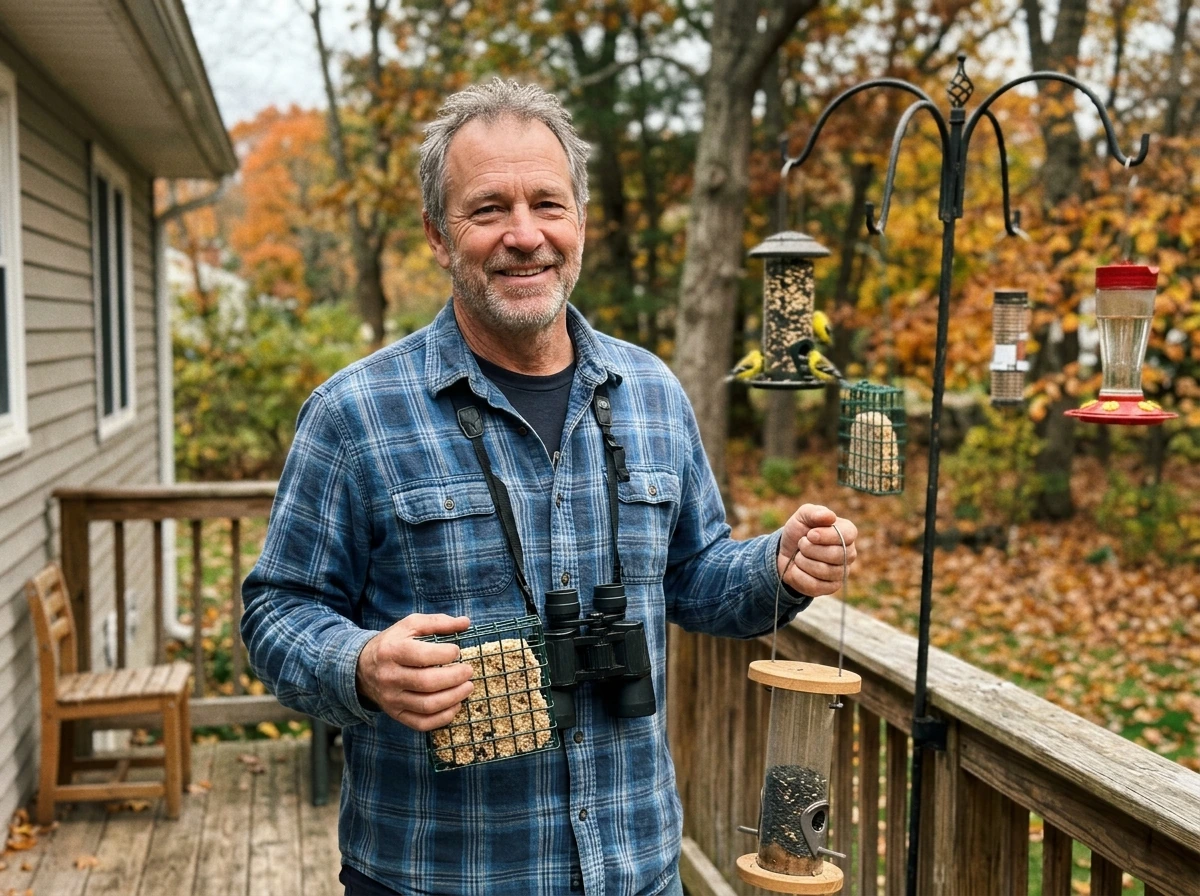
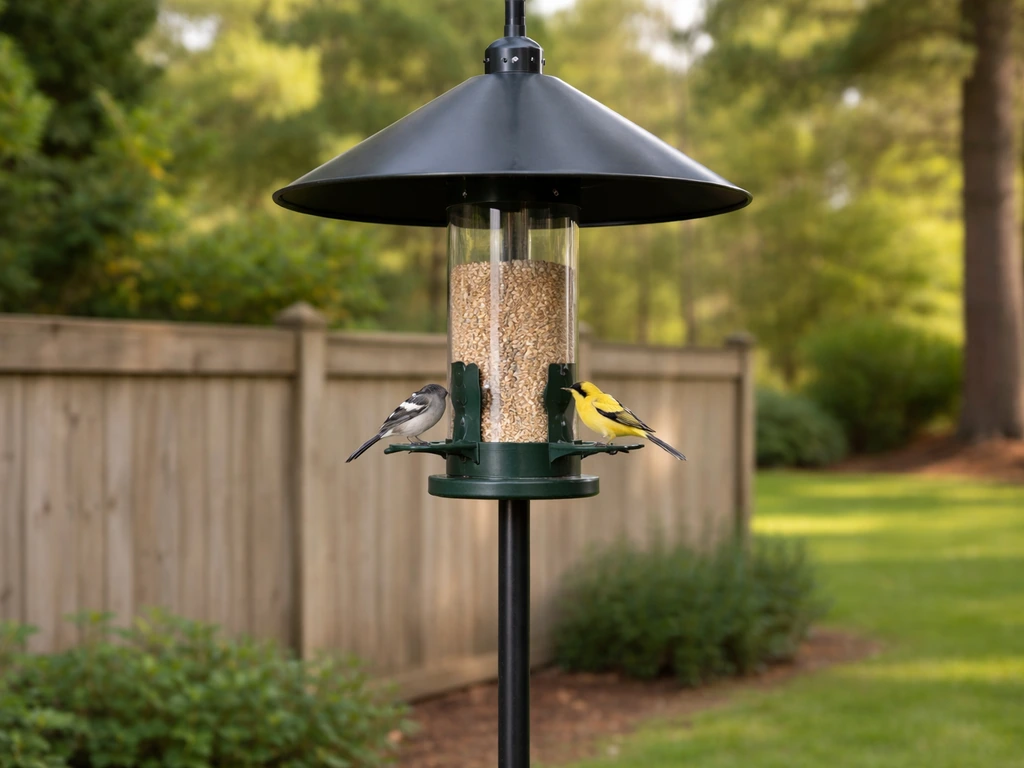
Pole mounting doesn't inherently stop doves, but a smooth metal pole with a baffle (the dome or torpedo style) prevents doves from climbing up from the ground and limits access points to aerial approach only. Combined with a caged tube feeder on top, pole mounting adds a meaningful layer of protection. Use a dedicated feeding station pole system (the ones with multiple hanging hooks and a center pole) and hang your dove-resistant tube feeders at 5 to 6 feet high. The pole baffle also helps against squirrels and rats, making it a multi-problem solution.
| Feeder Type | Dove-Proof Rating | Best For | Main Trade-Off |
|---|---|---|---|
| Caged tube feeder | Excellent | Finches, chickadees, titmice, nuthatches | Lower seed capacity than hoppers |
| Weight-sensitive tube feeder | Excellent | Finches, chickadees, nuthatches | Higher cost, mechanical parts to maintain |
| Weight-sensitive hopper | Good (with cage) | Cardinals, blue jays, mixed species | Doves can still perch on ledges without cage |
| Suet cage (upside-down) | Excellent (doves avoid suet) | Woodpeckers, nuthatches, chickadees | Doesn't serve seed-eating species |
| Window feeder | Very good | Small songbirds | Low capacity, frequent refilling needed |
| Platform feeder | Poor | Ground feeders (towhees, juncos) | Open surface invites doves naturally |
| Pole-mounted station with baffle | Good (as system) | Any feeder combo above | Setup time, cost of full pole system |
Setup and Placement: Getting the Location Right
Even the best dove-resistant feeder works better with smart placement. Doves are comfortable in open areas and don't need cover nearby to feel safe while feeding, unlike many songbirds that prefer feeders close to shrubs or trees. Use this difference to your advantage.
Height
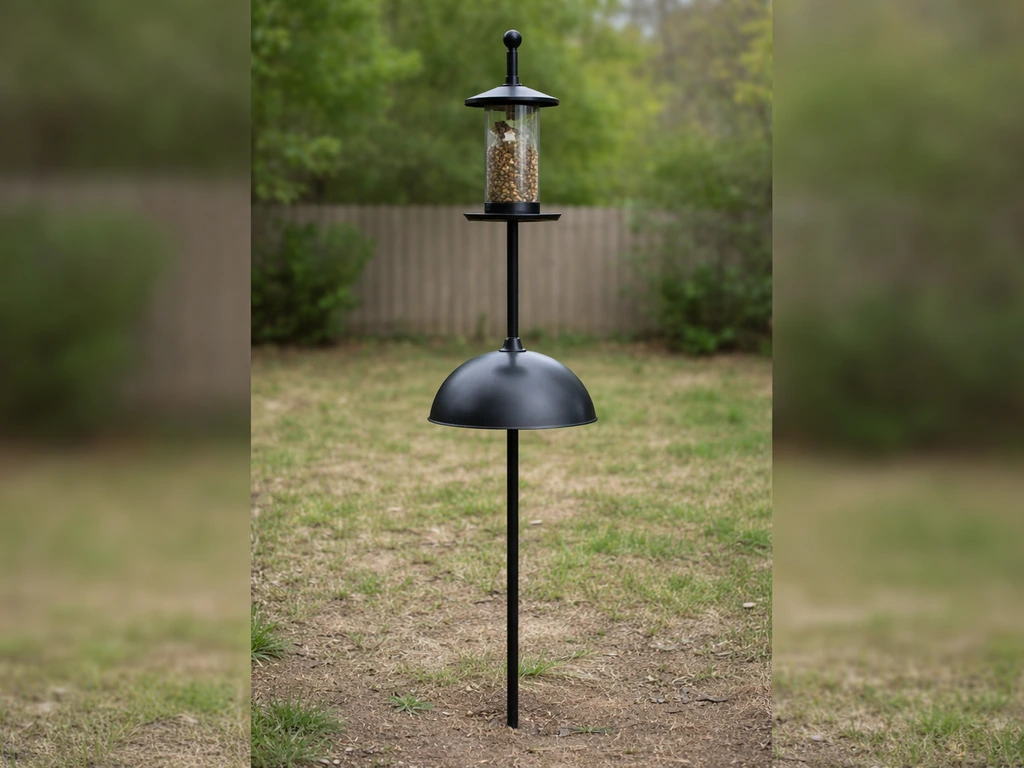
Mount your primary feeders at 5 to 6 feet off the ground. This is comfortable for songbirds and still accessible for viewing, but it removes the easy ground-approach angle that doves prefer. Doves will fly up to this height, so height alone won't stop them, but it's the right baseline for a properly set-up pole system.
Pole baffles and cage guards
Install a torpedo or dome baffle on your pole about 18 inches below the feeder. A similar approach works for bird feeders that are rat proof, with attention to how pests access seed and how you block ground-level entry. This prevents ground-approach climbing by squirrels, rats, and even doves attempting to hop up from below. A similar approach works for the best rat proof bird feeder too, since baffle and access-control design can limit both animal entry and spilled food squirrels, rats. The baffle also prevents spilled seed from piling up directly under the feeder (which would create a ground feeding station that doves love). Keep the area under feeders raked clean or use a seed catcher tray that collects spillage above ground level.
Distance from cover
Place feeders 8 to 12 feet from dense shrubs or trees. This gives small songbirds a quick escape route (important to them) while not being so close to cover that squirrels can leap directly onto the feeder. Doves don't need cover proximity the way songbirds do, so this placement preference is really about songbird comfort, not dove deterrence.
Spacing multiple feeders
If you're running multiple feeders, space them at least 10 feet apart. This prevents one dominant bird (or a group of doves) from blocking access to all feeders simultaneously. Run your dove-resistant tube feeders in one cluster for finches and chickadees, and if you want to give doves a managed, contained option rather than fighting them everywhere, consider a low, separate ground tray with safflower seed placed 20 to 30 feet away from your main station. Redirecting rather than eliminating is sometimes the most realistic strategy, especially if you actually enjoy seeing doves occasionally.
Seed and Feeding Strategy: What You Put In Matters as Much as the Feeder
Feeder design gets you most of the way there, but seed choice closes the loop. Mourning doves feed almost entirely on small seeds, grasses, millet, cracked corn, wheat, and cultivated grain types. These are also the filler ingredients in cheap mixed wild bird seed blends. If your feeder is filled with a bargain mix, you're broadcasting a dove invitation no matter how good the feeder hardware is.
Seeds that reduce dove visits
- Nyjer (thistle) seed: Too small for doves to handle efficiently in tube feeders; excellent for goldfinches and pine siskins
- Safflower seed: Doves will eat it but don't prefer it over millet or corn; cardinals, chickadees, and nuthatches love it
- Shelled peanuts (whole or pieces): Doves ignore these; woodpeckers, blue jays, and titmice love them
- Sunflower chips (no-shell): Reduces husk mess and doves eat them but don't strongly prefer them over ground options; use in a caged feeder to limit access anyway
Seeds to avoid if doves are a problem
- White proso millet: A top dove attractant; avoid entirely in mixed blends
- Cracked corn: Doves are highly attracted to it and will camp out for it
- Mixed wild bird seed blends with millet or corn as primary ingredients: These are basically dove bait; read the ingredient label before buying
- Whole milo/sorghum: Low value to most songbirds, but doves eat it freely
Switching to single-ingredient or premium seed blends built around nyjer, safflower, or shelled sunflower will immediately reduce dove pressure even before you change a single feeder. It also reduces the amount of waste seed on the ground beneath your feeders, which is where doves do most of their actual eating after they knock seed off a platform.
Troubleshooting: Doves Are Still Getting Through
If you've upgraded your feeder and changed your seed and doves are still consistently feeding, work through this checklist before giving up or buying something else.
- Measure your port size. Grab a ruler and physically measure the port opening. If it's over 1/2 inch in diameter, that's your problem. Some feeders marketed as "small port" are actually borderline. Under 3/8 inch is the target.
- Check for spillage on the ground. Even a perfectly dove-proof feeder creates spilled seed below it. Doves may not be accessing the feeder at all; they may be eating from the ground. Add a seed catcher tray at the pole level or rake clean daily under feeders.
- Look at what you're filling it with. If there's any millet or cracked corn in your blend, that's drawing doves to the area even if they can't get into the feeder itself. Switch seeds.
- Verify the weight threshold on adjustable feeders. Weight-sensitive feeders often ship with default settings designed for squirrels (much heavier than doves). Adjust the spring tension down to close at 75 grams or less. Check the manual for calibration instructions.
- Check cage gap spacing. If you're using a caged feeder, measure the grid opening. If it's larger than 1.5 by 1.5 inches, a dove may be fitting its head and bill through. Some cheaper cage surrounds use 2-inch spacing, which is too large.
- Look for landing surfaces on the feeder itself. Doves need something flat and stable to grip. If your feeder has a wide roof overhang, a decorative ledge, or any broad horizontal surface within reach of the seed, doves will stand there and try to reach in. Trim or add a deterrent strip.
- Don't rely on motion deterrents alone. Pinwheels, reflective tape, and motion-activated sprinklers have limited effectiveness with habituated doves. Physical feeder design and seed choice outperform all visual or sonic deterrents in consistent head-to-head comparisons. Use deterrents as a supplement, not a primary strategy.
When weather affects your feeder's performance
Weight-sensitive closing mechanisms can seize up in wet or freezing conditions if they're built with plastic internal parts. In winter, ice can freeze a spring-loaded baffle open, which defeats the whole system. Look for feeders with metal spring mechanisms and weather seals around ports. After a freezing rain, check your feeder's mechanism manually before trusting that it's still working. Metal cage surrounds don't have this problem and are inherently more reliable in harsh weather.
Seasonal Guidance: Spring Through Winter
Dove pressure isn't constant throughout the year. Understanding their seasonal patterns helps you adjust your setup efficiently rather than fighting the same battle at maximum intensity all year.
Spring and summer
Dove populations peak in spring and early summer around nesting season. Breeding pairs are actively foraging together, and juveniles (which are less cautious than adults) show up in higher numbers at feeders. This is when dove pressure is highest and when your feeder design and seed strategy need to be tightest. Double-check your setup in March and April before the spring surge hits. Natural food sources are scarce in early spring, so competition from doves for feeder seed is at its most intense.
Fall and winter
In fall and winter, natural seed sources dry up and dove flocks can grow large, sometimes 10 to 20 birds visiting a yard. However, cold weather also means doves spend more time at ground level foraging, so a well-placed pole-mounted caged feeder with no ground spillage is at its most effective in winter because there's no easy alternative for them nearby. If you live in a northern region where doves are year-round residents, this is when a clean, tight feeding station really pays off. You'll also notice an uptick in desired winter visitors (dark-eyed juncos, white-throated sparrows, American tree sparrows) who benefit from a properly managed station.
How to measure success quickly
After making any change (new feeder, new seed, new placement), give it 7 to 10 days before evaluating. Birds, including doves, are creatures of habit and will revisit a known food source for several days even after conditions change. Keep a simple log: note dove visits per day for the first week and compare to the week before. A 50 percent reduction in the first week and a 75 to 90 percent reduction by week three is a realistic success target. If you're not seeing improvement after two weeks, revisit the port size, seed blend, and spillage checklist above. A smart camera window feeder or a trail-cam pointed at your feeding station is genuinely useful here because it confirms whether you're actually seeing fewer doves or just fewer doves at the moments you happen to be watching.
One final note: truly "dove-proof" is a practical goal, not a guarantee of zero doves forever. If you’re also dealing with deer, look for the best deer proof bird feeder so your feeder stays protected from both wildlife pests and visitors dove-proof. A determined dove on a day when nothing else is available will try just about any feeder. What you're engineering for is a setup that's consistently unattractive to doves while remaining welcoming to the birds you want. Get the feeder design, seed, and placement right as a system and you'll get there. The readers who struggle longest with this problem are usually fixing only one variable at a time. Change all three together and the results are significantly faster.
FAQ
If I buy a “dove-proof” feeder but still see doves, what’s the most common reason?
Use the heaviest feeder birds you actually see. If you still get doves, verify the feeder has ports under 3/8 inch and that there are truly no convenient perches or ledges for them to land on and reach seed. If the hardware is right, the usual failure point is seed mix, because millet and cracked corn will keep attracting doves even to a tight-ported feeder.
Will changing seed to stop doves also make my other birds leave?
Switching seed can cut dove visits quickly, but it can also change what arrives. Nyjer (thistle) and safflower generally reduce doves more than common blends, but they also favor specific species, finches and cardinals for sunflower, finches for nyjer. If you care about songbirds beyond finches, consider running two feeding zones with different seed types instead of one mix for everything.
How can I confirm the weight shutoff mechanism is actually working at my feeder?
Yes. Any design that relies on weight shutoff needs a quick real-world test. After installation, wait for at least one small songbird visit, then gently place a safe weight (like a sealed, clean metal can) on the perch area to confirm the mechanism closes reliably. In very cold weather, test again after the first freeze, because freezing can change how the latch returns.
What should I measure to make sure a caged tube feeder is truly dove-resistant?
Don’t assume “cage spacing” means anything unless the gaps are measured. Doves can squeeze through if the opening is too wide, even if marketing photos look restrictive. Measure the clear space between the cage bars, and remember that the cage must surround the area where doves would insert their head and reach seed.
I like the look of a platform feeder, can I make it dove-proof?
Treat platform and open tray feeders as a separate, controlled feeding station. If you must keep one, keep it low and away from your main tube feeder, use safflower only, and keep the amount small so it empties quickly. Also plan to rake and clean under it daily, because leftover seed becomes a sustained ground buffet that doves can exploit.
If suet feeders are dove-resistant, why do I still see doves near my yard?
Not always. Suet is generally dove-averse, but doves can still linger nearby and eat spilled seed from other feeders. If doves are bothering you, check for waste seed accumulation and confirm your suet setup has a clean area around it, no spilled seed piles, and no access route that lets them reach other feeder types.
What’s the fastest way to tell if my changes are actually reducing dove pressure?
Place a camera or trail-cam if you need certainty. Motion blur and brief gaps in watching can make it seem like your changes “didn’t work.” Record daily visits for 7 to 10 days, and focus on whether doves are abandoning the feeder versus just arriving at different times. If doves still show up constantly, re-check ports, perch access, and the seed blend.
Do I need to dove-proof every feeder, or just the one they use most?
If your setup has multiple feeder types, doves may simply switch to whichever one is easiest. Start by identifying the exact feeder they are using, then solve the weakest link first by tightening port access and eliminating nearby ground seed. Only after the primary dove target is addressed should you expand to other feeders.
Will a pole baffle alone stop doves from feeding?
A baffle helps, but it is not a substitute for access control on the feeder. Doves can access from above if there are open platforms, wide shelves, or convenient landing spots. The best combo is a pole baffle to prevent climbing from below, plus a tube feeder design that limits head access through small ports and avoids comfortable landing geometry.
Is it better to redirect doves to a separate area instead of trying to eliminate them?
Yes, and it can be a useful compromise. If you include a distant “decoy” ground option with small amounts of safflower, you may redirect some foraging away from your main feeders. The key is distance (often 20 to 30 feet or more), strict portion control, and fast cleanup so you do not create a second, bigger feeding station that eventually increases overall dove visits.
Ranked best rat proof bird feeder UK picks with key features, installation tips, and fixes to stop rodents accessing see
UK guide to the best starling proof bird feeders: pick port sizes, designs, seed and setup to stop starlings.
Learn how to pick and mount the best deer proof bird feeder with guards, height, and setup that keeps birds feeding.