The best no mess bird feeder is one that combines a tight seed-dispensing design with a seed-catching tray underneath, and is paired with hull-free seed like sunflower chips or a no-mess blend. That combo eliminates the two biggest sources of backyard mess: empty shells piling up and birds flinging unwanted seed off a platform. If you want a single strong pick, the Brome BirdsUP Seed Catcher Tray used as an XL platform under a quality tube feeder is hard to beat for versatility. For the best grackle proof bird feeder, focus on designs that prevent grackles from flinging seed and include strong baffle or access control features a quality tube feeder. For a self-contained option, the Perky-Pet Pistachio Gazebo with its wraparound seed tray does a solid job of catching scatter before it hits the ground. Pair either with hulled sunflower or Wild Birds Unlimited's No-Mess Blend and you've solved 80% of the mess problem immediately.
Best No Mess Bird Feeder: Guide to Low Mess Seed and Setup
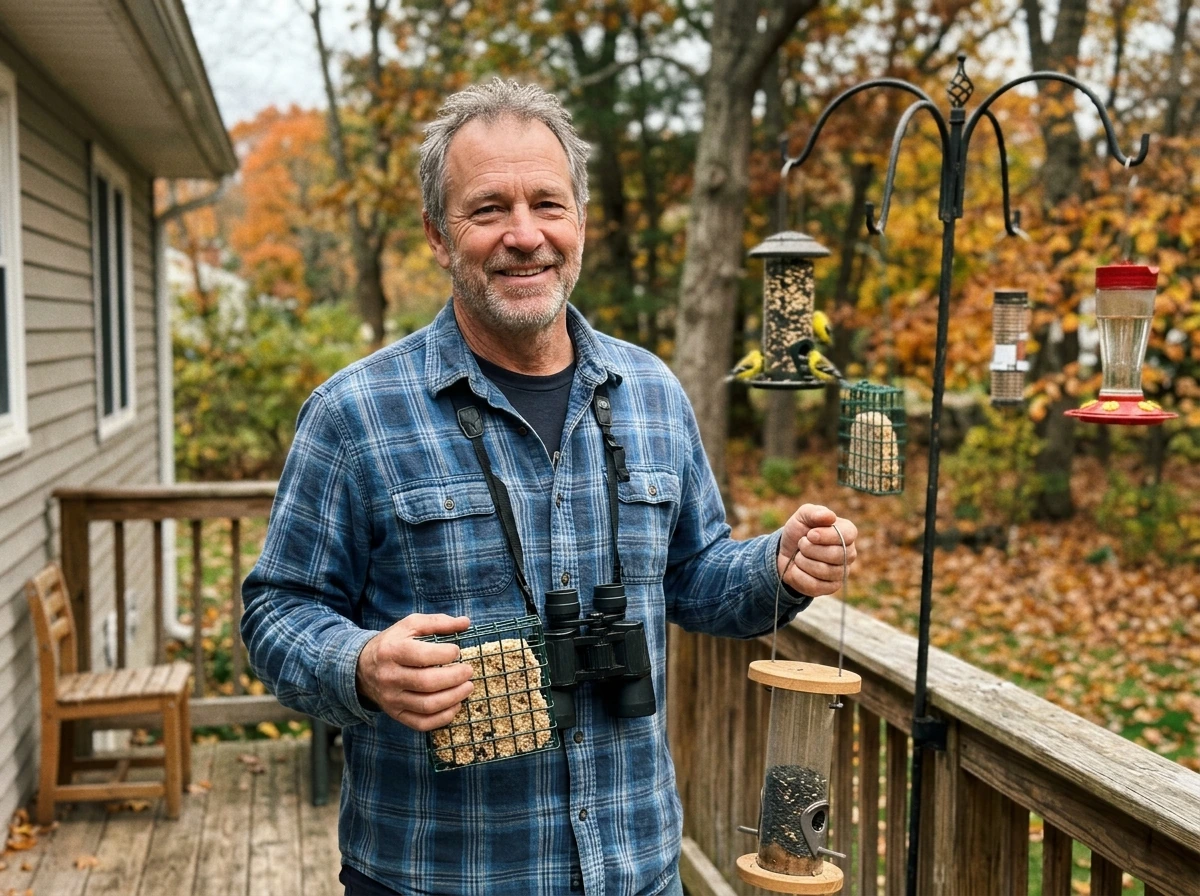
What 'no mess' actually means in your backyard
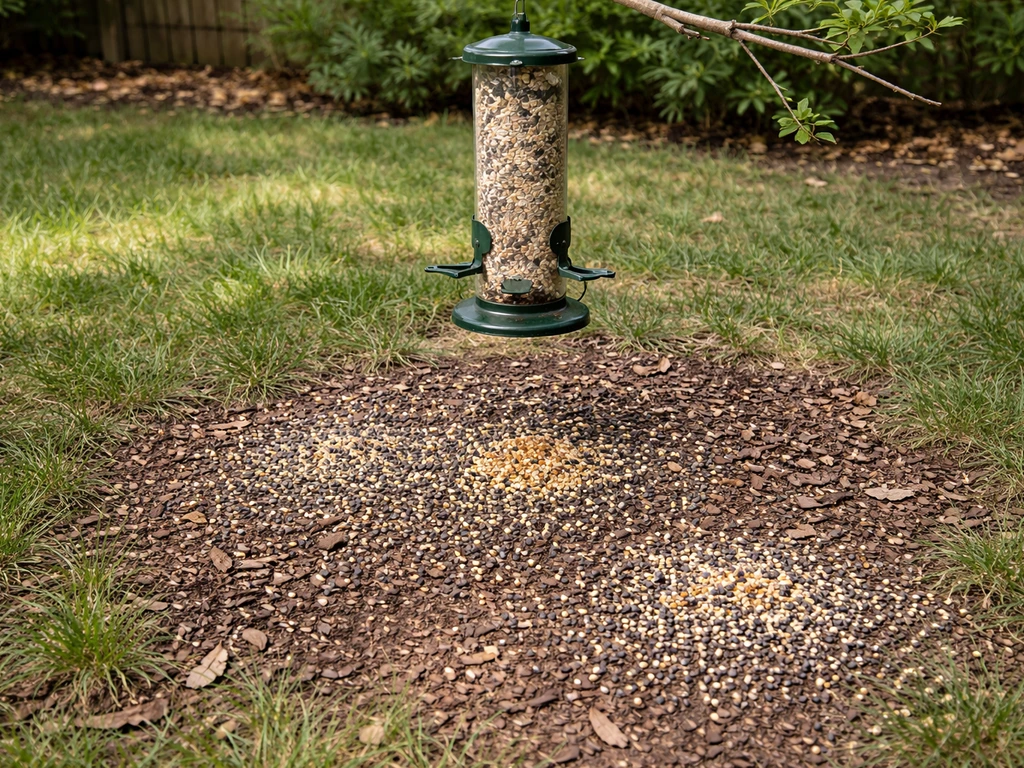
The term gets used loosely by marketers, so it helps to break it into three distinct problems. First, there's shell and hull waste: birds crack open seeds, drop the hulls, and within a week you have a crunchy gray carpet under your feeder that kills grass and smells when it gets wet. Second, there's seed scatter: birds are picky eaters and will toss seeds they don't want out of the feeder to dig for the ones they do. If you want the most hands-off approach, pick the best starling proof bird feeders designed to prevent access and reduce unwanted mess. Mass Audubon puts it well: birds routinely kick smaller seeds onto the ground in search of sunflower, which means a mixed-seed feeder can create more waste than a single-seed one. Third, there's droppings and spoilage accumulation directly under or inside the feeder, which is both a visual mess and a real disease vector.
A truly no-mess setup addresses all three. That means choosing seed without shells, using a feeder design that doesn't encourage flinging, and managing what falls on the ground. No single feeder eliminates everything, but the right combination gets you very close. Cole's Wild Bird Products states it plainly: the only genuinely no-waste seed is sunflower meats (hulled sunflower), because any seed with a shell will leave debris by definition. Keep that in mind when you see 'no mess' on a feeder label without any mention of seed type.
Top no mess bird feeder picks (and what makes them work)
Not all feeders are designed with mess control as a priority. These ones actually are, and each solves the problem in a slightly different way depending on your yard and the birds you're targeting.
Brome BirdsUP Seed Catcher Tray
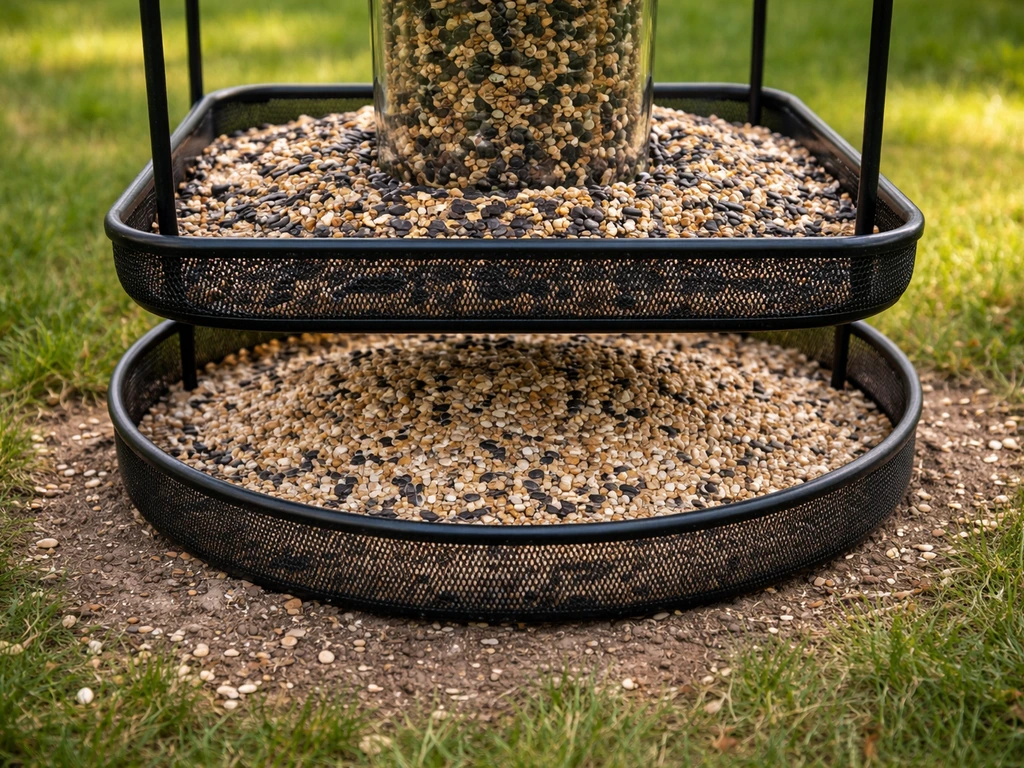
Brome markets this explicitly as an XL platform feeder designed to attract more birds and create less mess, and it lives up to that. It sits under your existing feeder and intercepts spilled seed before it reaches the ground. That spilled seed then becomes accessible to ground-feeding birds like doves and sparrows, so nothing goes to waste. If you want the best results for doves, prioritize a feeder setup that catches dropped seed and uses hull-free seed so cleanup stays minimal. For doves in particular, a seed-catcher style setup helps ensure the spilled seed becomes accessible without turning your yard into a mess ground-feeding birds like doves and sparrows. It's a versatile add-on that works with most hanging feeders and is one of the most practical mess-reduction purchases you can make for under $30. If you want the best pigeon proof bird feeder, prioritize designs that minimize access to spilled seed and use hull-free, fully edible seed options mess-reduction purchases.
Perky-Pet Pistachio Gazebo Feeder (Gaz01)
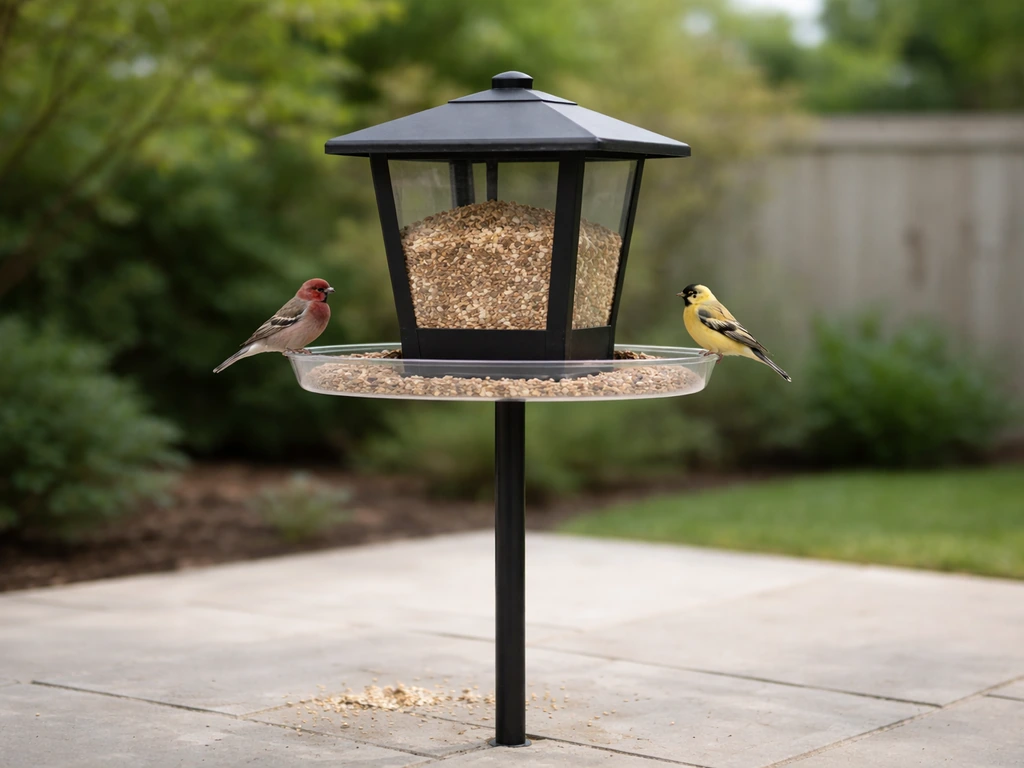
This is a good self-contained option if you want a single feeder rather than a feeder-plus-tray setup. Perky-Pet built a wraparound seed tray directly into the design specifically to catch dropped seeds and reduce mess below. The gazebo-style roof also protects seed from rain, which cuts down on spoilage and that wet-seed odor. The main trade-off is cleaning: the tray catches seed, but you do need to wipe it out regularly or it becomes a shallow puddle of soggy hulls.
Squirrel Buster Plus
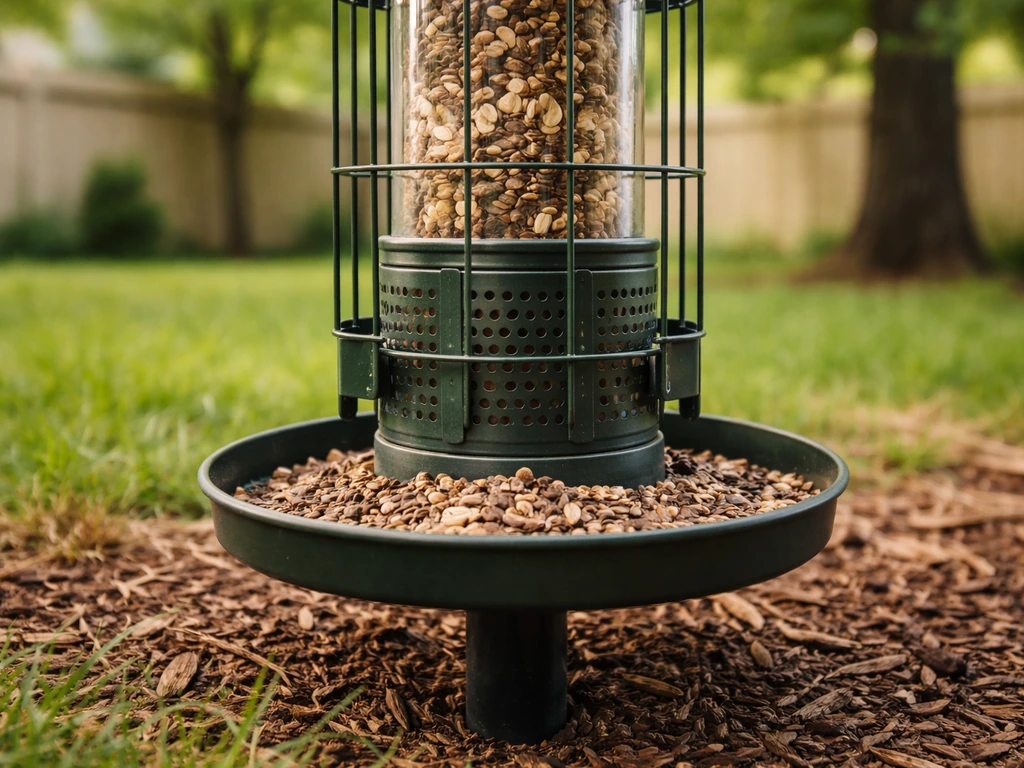
If squirrels are a major mess contributor in your yard (and they usually are), the Squirrel Buster Plus handles two problems at once. Its patented Seed Tube Ventilation System vents humidity and warm air from the top of the seed tube, which reduces spoilage and seed clumping inside the feeder. Spoiled or clumped seed is a major under-discussed mess source since birds reject it and scatter it trying to get to fresh seed underneath. The weight-sensitive perches close off ports when a squirrel climbs on, so less seed gets raided and thrown around.
Perky-Pet Dual Mesh Seed Feeder (TSS00349)
This feeder holds 2.85 lb of seed split across sunflower and thistle, and it has built-in drain holes to keep seed dry and fresh. Mesh-style feeders inherently limit scatter because birds cling to the outside and extract seeds one at a time rather than digging through a tray. The dual-seed design also means you can serve two bird types without running two separate feeders, which helps keep your setup tighter and more contained.
WoodLink Tube Feeder Seed Catch Tray (NATUBETRAY)
If you already own one of blank" rel="noopener noreferrer">WoodLink's Audubon tube feeders (NATUBE1 through NATUBE12 series), this tray bolts right onto the bottom and intercepts whatever falls from the ports. It's a low-cost retrofit rather than a new feeder purchase, and it works well if you're happy with your current tube feeder but just want to stop finding seed all over the ground beneath it.
The best no mess wild bird seed options
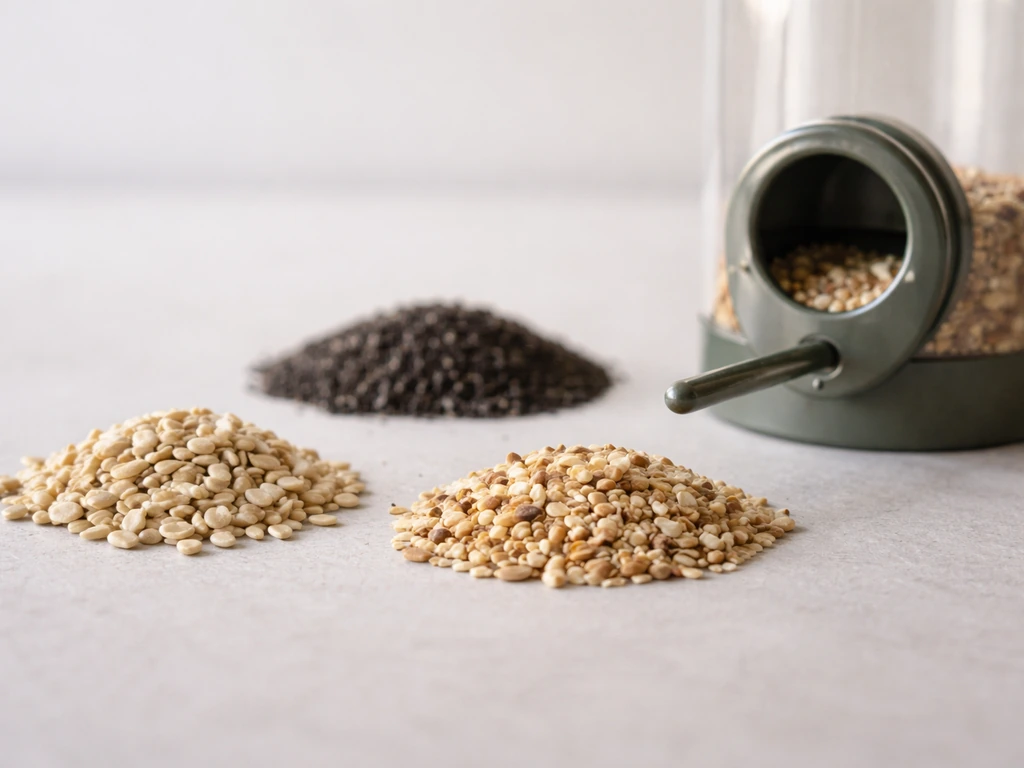
The seed you put inside a feeder matters just as much as the feeder design. Even the best-engineered feeder will create mess if you fill it with a cheap mixed-seed bag full of filler seeds birds won't eat.
| Seed Type | Mess Level | Best For | Notes |
|---|---|---|---|
| Hulled sunflower (sunflower chips/meats) | Very low | Most songbirds | No shells, 100% edible, works in any feeder style |
| No-Mess Blend (sunflower chips, diced peanuts, millet) | Low | Broad variety of species | WBU blend is 100% edible; no filler, no shells |
| Nyjer/thistle (loose) | Low-medium | Finches, redpolls | Very fine; use mesh or nyjer-specific tube feeder |
| Safflower seed (whole) | Medium | Cardinals, chickadees | Shells present but squirrels tend to avoid it |
| Standard mixed seed (with milo, wheat) | High | Sparrows mainly | Most waste comes from birds rejecting filler seeds |
| Whole peanuts in shell | High | Jays, woodpeckers | Shells scattered widely; save for dedicated peanut feeder |
Hulled sunflower is the single best upgrade you can make if mess is your primary concern. Cornell Lab's All About Birds notes that shelled sunflower is specifically popular with people who have trouble managing seed shells under their feeders, and it's easy to see why: there's nothing left behind. The downside is cost (hulled seed runs roughly 30-50% more per pound than black-oil sunflower) and the fact that it spoils faster once exposed to rain, so covered feeders or small refills matter more.
Wild Birds Unlimited's No-Mess Blend DP is worth calling out by name because it's genuinely 100% edible. It combines sunflower chips, diced peanuts, and millet, and nothing in it has a shell. Audubon also makes the practical point that offering different seeds in different feeders (rather than one mixed feeder) cuts waste dramatically, since each feeder attracts the birds that actually want that seed instead of a sorting frenzy.
How to set up a no-mess feeding station
Getting the placement and setup right from the start saves you a lot of cleanup later. Here's the practical approach I'd use for a genuinely low-mess station.
- Choose a hard surface beneath the feeder if possible. Flagstone, a patio, or a rubber mat makes sweeping up any fallen seed fast and easy. Grass directly under a busy feeder gets destroyed quickly.
- Hang the feeder at 5 to 6 feet off the ground. This is comfortable viewing height, keeps seed off the ground from direct tossing, and makes it manageable to attach and remove seed catcher trays.
- Mount a seed-catching tray 6 to 8 inches below the feeder ports. The tray intercepts scatter and becomes a secondary feeding platform for ground-feeding species, so the seed gets eaten rather than rotting.
- Use a baffle both above and below the feeder on a pole-mounted setup. A top baffle keeps rain off the seed; a lower baffle keeps squirrels off the feeder and prevents the frantic scrambling that throws seed everywhere.
- Position the feeder at least 10 feet from dense shrubs or fences. This limits the squirrel leap-and-grab that sends seeds flying in every direction.
- Keep a small hand broom or leaf blower nearby. Even the best setup drops something eventually, and sweeping every few days takes less than two minutes.
One setup decision that surprises people: don't place the feeder directly over a flower bed you care about. Even with hull-free seed, droppings and seed-catching-tray overflow will land somewhere, and it will kill or stain whatever's underneath. A neutral zone like gravel or bare ground is genuinely the best spot for a high-traffic feeder.
Keeping pests and spillover under control
Squirrels and rodents don't just steal seed: they create mess by chewing on feeders, dumping trays, and scattering seed aggressively while they feed. Addressing pests is a direct part of mess management, not a separate issue.
- Use a weight-activated squirrel-proof feeder (like the Squirrel Buster Plus) to prevent squirrels from sitting at ports and tossing seed freely.
- Install a pole-mounted baffle (a dome style, at least 17 inches wide) below the feeder if hanging from a pole. This stops ground-level squirrels from climbing up.
- Don't use platform feeders or open trays as your primary feeder in areas with heavy squirrel pressure. They're basically squirrel buffets.
- Switch to safflower or Nyjer seed if squirrels are a problem. Squirrels strongly dislike both, and most songbirds that matter will still come.
- Bring feeders in at night or use feeders with locking seed ports if rodents like rats or mice are active in your yard. Nocturnal feeding creates ground seed accumulation that invites rodents.
- In windy locations, use a tube feeder with smaller ports rather than a platform or open hopper. Wind pushes seed off open feeders faster than birds can eat it.
- Rake or sweep the area under your feeder at least once a week. Project FeederWatch specifically recommends this to prevent disease-spreading accumulation of waste and droppings.
Rodents specifically are drawn by seed on the ground, not the feeder itself. If you're already dealing with rats under your feeder, the ground seed management matters more than which feeder you buy. If rats are still a problem, choose bird feeders that are rat proof and pair them with hull-free seed Rat-proof feeders. Rat-proof feeders and rodent-deterrent setups pair naturally with no-mess seed choices since hull-free seed leaves far less residue on the ground for nocturnal scavengers to find. To keep deer from getting to your seed, choose a deer-proof bird feeder that limits access and withstands browsing.
Which birds each no-mess feeder and seed combination supports
Matching your feeder and seed to your target birds is what makes the system work. A no-mess setup that doesn't attract the birds you want isn't really solving anything.
| Target Birds | Best Feeder Type | Best No-Mess Seed | Notes |
|---|---|---|---|
| Goldfinches, house finches, redpolls | Mesh tube or Nyjer sock | Nyjer/thistle or sunflower chips | Mesh feeders minimize scatter; Nyjer is nearly zero-waste |
| Cardinals, grosbeaks | Hopper or tube with wide ports | Hulled sunflower or safflower | Cardinals prefer larger perches; hulled sunflower = no shells |
| Chickadees, nuthatches, titmice | Tube feeder or mesh | Sunflower chips or no-mess blend | Grab-and-go feeders; very tidy eaters with right seed |
| Woodpeckers | Suet cage or peanut feeder with tray | Diced peanuts, suet cakes (no-melt) | Suet cakes leave almost no ground mess; use caged suet feeder |
| Blue jays | Hopper or platform with tray | Whole peanuts or sunflower chips | Jays create scatter; a seed-catcher tray is essential here |
| Doves, sparrows (ground feeders) | Seed catcher tray / low platform | Millet, hulled sunflower | Let them clean up what falls from upper feeders |
| Orioles, hummingbirds | Nectar/jelly feeder (drip-proof) | Nectar, grape jelly | Drip-guard cups prevent sticky mess below feeder |
| Bluebirds | Mealworm dish feeder with cover | Live or dried mealworms | Covered dish prevents mealworm scatter and moisture buildup |
One practical note on doves: they're actually useful in a no-mess setup as cleanup crew. A seed-catcher tray positioned under your main feeder will attract doves and sparrows that eat whatever other birds drop, which means the tray empties naturally and you sweep up less. If you're more focused on keeping doves away from your station rather than welcoming them, that's a separate conversation around dedicated setups.
Seasonal maintenance and keeping things clean year-round
Regular cleaning schedule
Both the U.S. Fish and Wildlife Service and Mass Audubon recommend cleaning feeders at least every two weeks to prevent disease. That's the minimum. In humid summer months or wet winter conditions, weekly is better, especially for any feeder where seed can get damp. The standard method recommended by the CDC and Mass Audubon is to soak the feeder in a diluted bleach solution of 1 part bleach to 9 parts water for at least 10 minutes, then rinse thoroughly and air-dry completely before refilling. A feeder put back while still wet will spoil the next batch of seed within days.
Winter-specific tips
Winter creates a specific cleaning challenge: seed-catching trays and platform feeders can fill with snow and ice, trapping wet seed that freezes into a solid, moldy block. Perky-Pet's own product notes acknowledge that cleaning seed-catching trays is more difficult in cold weather, which is worth keeping in mind when you're choosing a feeder. For winter feeding, slightly smaller trays that you can bring inside for cleaning, or feeders with removable tray inserts, are far more practical than large fixed-tray designs. Hulled sunflower seed also spoils faster in damp winter conditions, so smaller, more frequent refills beat topping off a large reservoir.
A tube feeder with ventilation (like the Squirrel Buster Plus with its Seed Tube Ventilation System) handles winter humidity better than a sealed hopper, because trapped condensation in a closed hopper turns seed into a compacted, moldy brick. In freezing temperatures, check ports every few days for ice blockages, especially on nyjer feeders where the small ports clog easily.
Ground management year-round
Even a well-designed no-mess station will accumulate some waste on the ground below it. The habit that makes the biggest difference is regular sweeping. Project FeederWatch recommends raking or sweeping under feeders routinely to prevent accumulation of droppings and spoiled food, both of which attract pests and spread disease. If you have a seed-catcher tray, empty and wipe it every 5 to 7 days. Moldy seed in a tray is worse than seed on the ground because birds are eating directly from it. And if seed gets wet inside the feeder at any point, empty the whole thing, clean it with the bleach solution, and start fresh. Wet seed degrades quickly and the mold spread to dry seed much faster than you'd expect.
The core no-mess system really comes down to three things: hull-free seed, a feeder with a catching tray or tight dispensing design, and a weekly five-minute maintenance habit. Get those three working together and you'll find that backyard bird feeding stops feeling like a chore and starts feeling like something you actually look forward to.
FAQ
Does a “no mess” bird feeder mean there will be zero waste on the ground?
Not usually. A true low-mess setup still drops some material (hulls, bits of damp seed, and droppings). The practical goal is “minimal waste,” so choose hull-free seed (like hulled sunflower) and a feeder that catches scatter, then plan on quick sweeping (or tray emptying) on a routine schedule.
Can I use any bird seed in a best no mess bird feeder, or do I have to change the seed?
In most cases, yes. If you use a mixed-seed bag that includes shelled seeds or filler birds discard, you will get shells and scatter even with a good catcher tray. For the cleanest results, switch to 100% edible options (hulled sunflower, sunflower chips, or a no-shell blend) rather than just changing the feeder.
Why does my yard still get messy even with a seed-catcher tray?
Yes, and it is often missed. If the feeder tray overflows during busy feeding periods, or if the tray is angled so seed spills to the side, you can still stain grass and attract pests. Use a tray or catcher insert that fully intercepts under the ports, and keep the feeder positioned so dropped material lands in your neutral zone (gravel/bare ground), not a bed edge.
How often should I empty and clean the tray compared with the feeder?
Clean the “catch” parts more often than the feeder body. Tray seed sits in a thin layer, so it spoils fast when it gets damp. Empty and wipe the tray about every 5 to 7 days, and if you ever see wet seed, discard it and clean thoroughly before refilling.
What should I do if seed gets damp inside the feeder?
If seed is getting wet inside the feeder, don’t just let it dry and keep going. Empty the feeder, clean it, and start with fresh dry seed, because wet seed breaks down quickly and can spread mold from the wet pockets to new food. Also check whether the feeder is too exposed to sideways rain and consider a more covered design or placement changes.
Is hulled sunflower worth the extra cost for a low-mess setup?
Hulled sunflower typically costs more and spoils faster once exposed to rain, but it is cleaner under feeders because it leaves far less residue. If you go this route, reduce waste by using smaller refills more frequently and keep the feeder under good shelter or in a protected placement.
Are “no mess” seed blends always truly hull-free?
They can, but the “edible” claim depends on the specific product. Choose blends explicitly described as no-shell or fully edible, and verify the feed type is hull-free (not just “low shell” or “mostly hulled”). If you are unsure, buy a smaller bag first and check the contents for shells before committing to a full season.
Where should I place my best no mess bird feeder to keep the ground clean?
Placement can change results as much as the feeder. Avoid hanging directly over flower beds or areas you care about, and use a neutral zone like gravel or bare ground under the entire drop pattern. If neighbors complain about mess, moving the feeder a few feet can reduce both scatter and stain.
Do no-mess feeders work in winter, and how do I prevent freezing/clogging?
You should treat tube ports like small potential clog points, especially in cold weather. Check more frequently during freezes because condensation can ice up and block ports, which then forces seed to back up and scatter. If your feeder uses small ports (nyjer in particular), expect more frequent spot checks.
If I still have a mess problem, could squirrels or rodents be the real cause?
Often, yes. Squirrels and rodents create mess by chewing and dumping, not just eating. If you see raided trays, chewed feeder parts, or scattered seed around the base, add a squirrel-resistant feeder approach and keep the ground under the feeder cleaner than you would otherwise to reduce attractants.
Do doves and sparrows increase or reduce mess in a no-mess setup?
If you want to reduce ground waste, a tray that lets “appropriate” ground feeders use the dropped seed can help. Doves and sparrows can function like a cleanup layer because they consume what falls instead of leaving it to rot, but if you do not want doves at all, you may need a dedicated feeder layout that either discourages them or uses separate feeding stations.
What’s the most important maintenance habit if some mess still happens?
Regular sweeping is the safety net when “perfect” containment is impossible. Even with hull-free seed, droppings and occasional spoiled bits accumulate. Sweep or rake under the feeder routinely, and if you use a tray, wipe it so moldy seed does not sit where birds can keep eating from it.
If I retrofit a tray under my feeder, will it work reliably without adjustments?
Not always. Tube feeders can leak or overspill depending on how much seed you load and how the ports dispense, and platform additions can tilt or sit too far from the drop line. Make sure the tray bolts on securely (for retrofit systems) and that it intercepts the entire under-port area, then adjust height so the drop pattern stays centered.