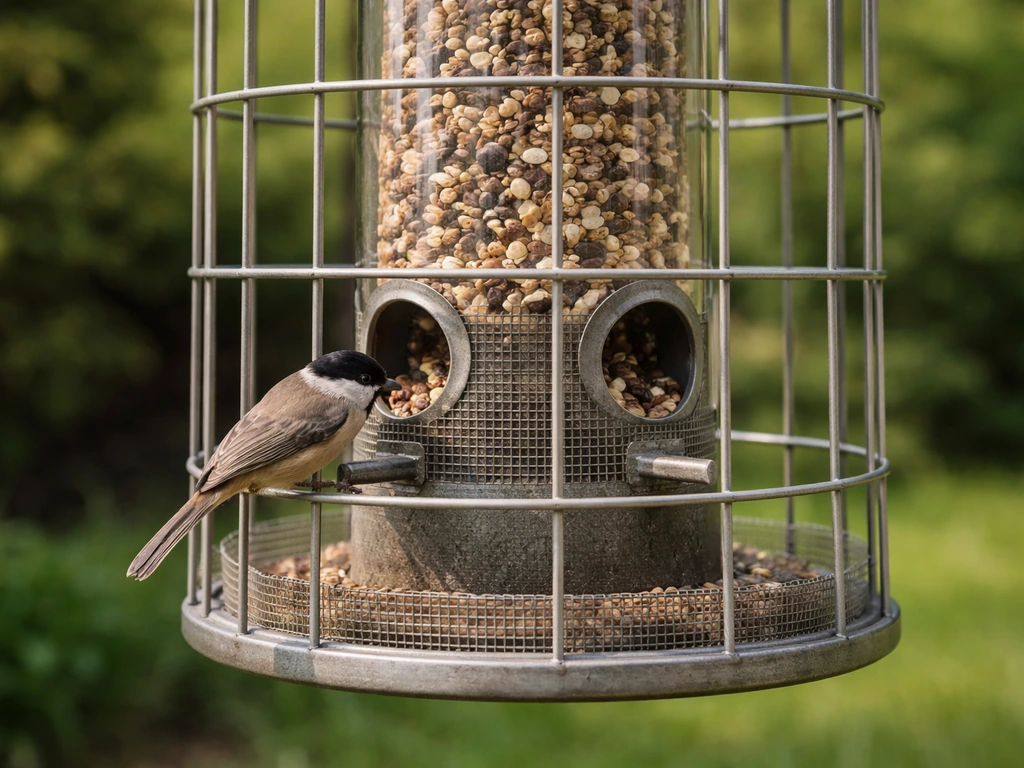
The most effective pigeon-proof bird feeders use a steel cage or shroud around a tube or hopper, with feeding ports sized for small songbirds (roughly 1.5 inches or less) and short or no perches so pigeons cannot grip and stabilize themselves long enough to eat. Pair that with the right seed, correct mounting height, and a baffle on the pole, and you can cut pigeon visits down to nearly zero while still feeding chickadees, finches, nuthatches, and cardinals without issue.
Best Pigeon Proof Bird Feeder: DIY Setup and Upgrades

Marcus Hendricks
1 Jun 2026
Why Pigeons Keep Getting Into Your Feeder
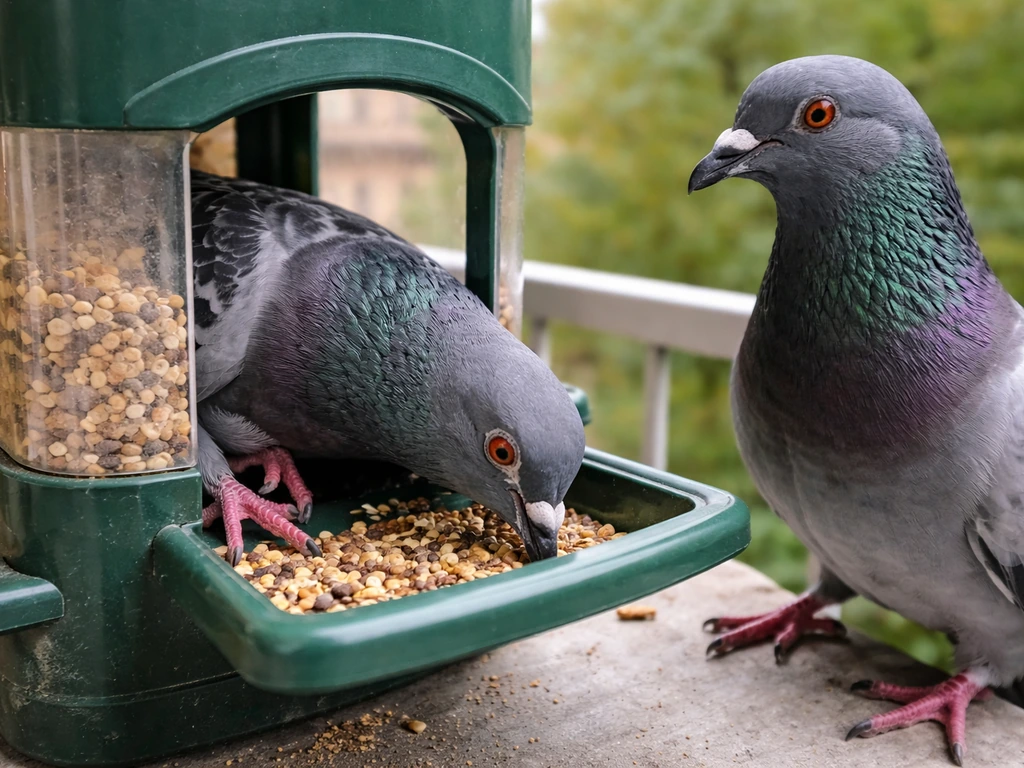
Rock Pigeons are big, bold, and behaviorally flexible. They evolved foraging on flat surfaces, which is why they are so comfortable on wide platform feeders, hopper trays, and the ground beneath any feeder. They are not picky eaters: millet, sunflower, corn, safflower, mixed seed blends, even cracked corn scattered as spillage will bring them in. In urban and suburban yards, they are also socially tolerant of humans, which means they will not spook easily the way a shy warbler might. Audubon notes that Rock Pigeons are commonly seen around humans and often use human-provided foods in city settings.
The two things that let pigeons exploit a typical feeder are body access and seed spillage. Body access means the feeder's openings, trays, or perches are large enough for a pigeon (roughly 11 to 14 inches long, weighing 9 to 13 oz) to land, stabilize, and reach seed. Seed spillage means excess seed ends up on the ground, creating a secondary buffet that is almost impossible to pigeon-proof once it is down there. Fix those two vulnerabilities and you have solved the problem.
A third, less obvious vulnerability is port size. When feeder openings are wide relative to the seed inside, a pigeon that manages to grip the feeder even briefly can scoop out a mouthful or jolt the feeder so seed pours onto the ground. Smaller, tightly spaced ports that require clinging rather than flat-footed standing are physically uncomfortable and mostly inaccessible to pigeons. That is the core engineering principle behind every pigeon-proof feeder worth buying.
What to Look for in a Pigeon-Proof Feeder
Not every feeder marketed as "pest-proof" will actually stop pigeons. Here are the design features that genuinely matter:
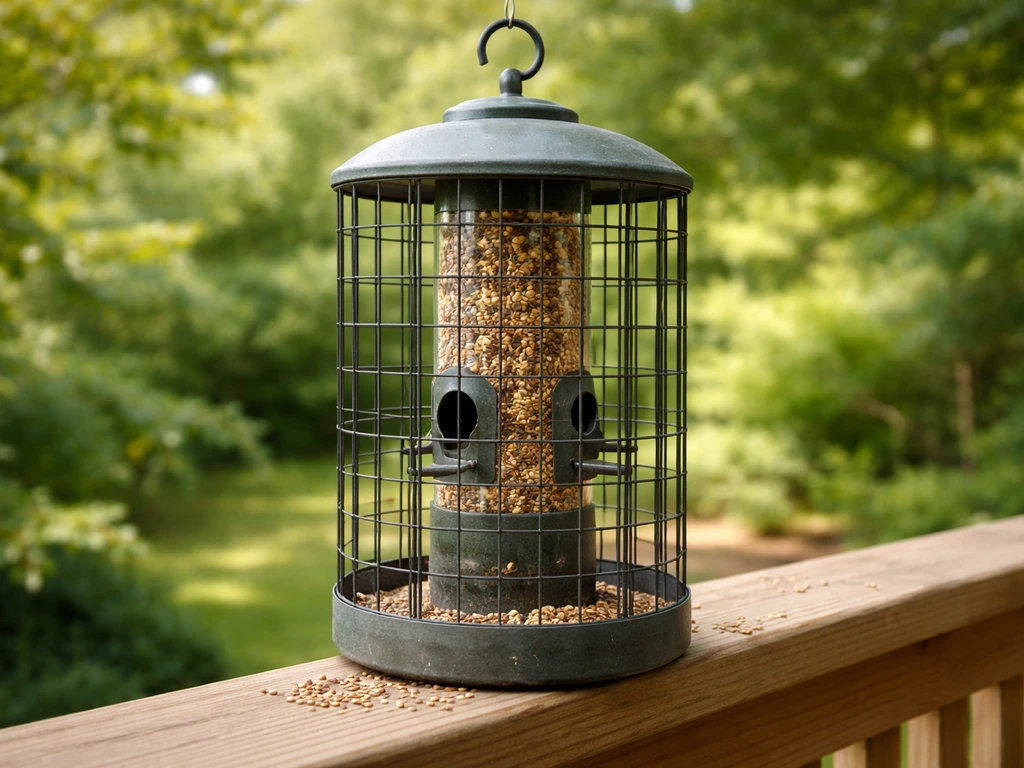
- Steel cage or wire shroud: A cage surrounding the inner feeder tube or hopper, with mesh openings of roughly 1.5 inches (38mm) or less, physically prevents a pigeon's body from reaching the seed ports. Smaller mesh (around 1 inch) will also block starlings, which is a bonus if you have that problem too.
- Short or no perches: Standard tube feeders come with long perches that give big birds a stable platform. Pigeon-proof designs either eliminate perches entirely (forcing birds to cling to the mesh) or use perches shorter than 1 inch, which small songbirds manage fine but pigeons find useless.
- Weight-sensitive closing mechanism: Some feeders use a spring-loaded shroud that drops over the ports when a bird above a certain weight lands. These work well for pigeons (typically over 9 oz) while staying open for sparrows, finches, and chickadees (usually 0.5 to 1.5 oz). Make sure the weight threshold is adjustable so you can dial it in for your species mix.
- No wide tray or landing platform: Avoid feeders with broad catch trays or flat ledges directly under ports. These are landing pads for pigeons. If a feeder you like has one, check whether it can be removed.
- Tight seed containment: Look for feeders with seed channels or baffled interiors that resist spillage when the feeder is jostled. Less seed on the ground means fewer pigeons drawn in from below.
- Durable materials: Powder-coated steel or heavy-gauge aluminum holds up better than thin plastic, which pigeons can crack or deform with repeated attempts to force access.
How Different Feeder Types Handle Pigeons
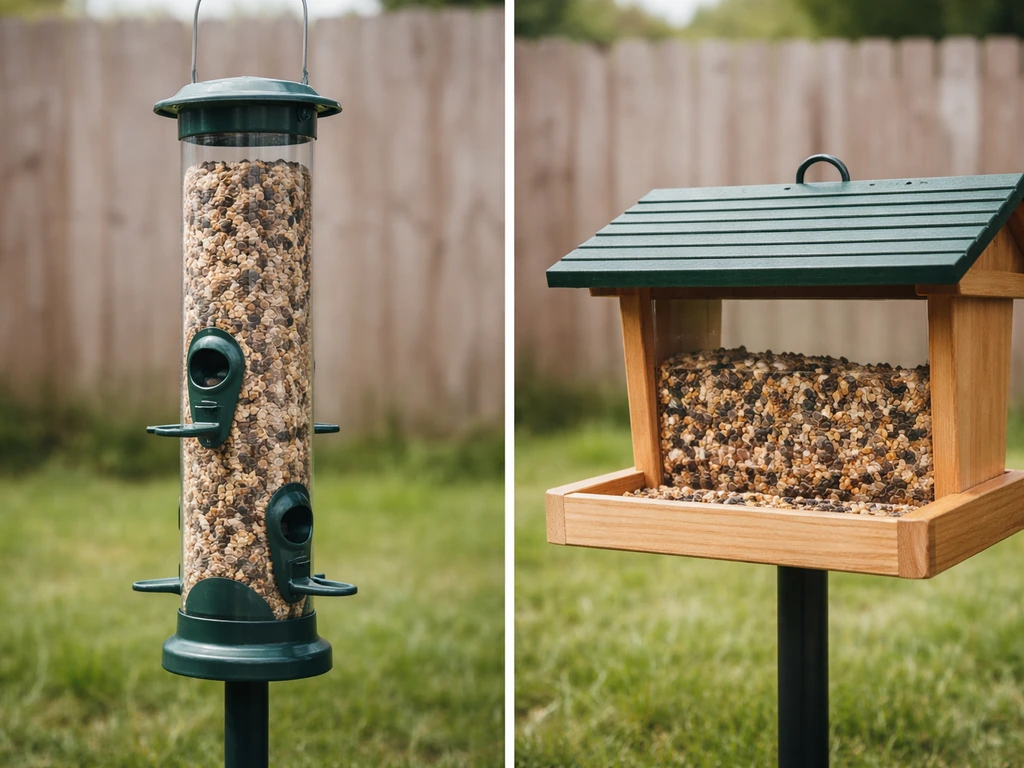
Your feeder type determines both how vulnerable you are to pigeons and what your best fix looks like. Here is how each common type stacks up.
Tube Feeders
Tube feeders are your best starting point for pigeon-proofing because the cylindrical design already limits landing space. A standard tube feeder with short perches and small ports (sunflower-size, around 3/8 inch) will give pigeons trouble, but a determined bird can still cling briefly, drain ports, or shake seed loose. The upgrade is a caged tube feeder: a steel wire cage surrounds the entire tube, spaced 3 to 4 inches out from the surface. Small birds fly through the cage openings easily. Pigeons cannot fit their bodies through and cannot reach the ports from outside. This is the design sold by brands like Audubon and Brome, and it is genuinely one of the most effective pigeon-stopping setups available.
Hopper Feeders
Hopper feeders are trickier. The wide tray at the bottom is essentially a welcome mat for pigeons. A standard hopper with a generous seed tray is one of the worst feeder types for pigeon pressure. If you want to keep using a hopper, look for models with a narrow tray lip (under 2 inches of usable standing width) or consider adding a caged shroud designed for hopper-style feeders. Alternatively, switch the contents to safflower only, which pigeons largely ignore but cardinals and house finches love.
Platform Feeders
An open platform feeder placed near the ground is basically a pigeon dining table. Platform feeders attract ground-feeding birds by design, and pigeons are among the most aggressive ground feeders around. If you want to keep a platform feeder for mourning doves or juncos, place it at least 5 feet off the ground and consider a dome baffle above it to restrict approach from above.
A dome baffle and correct height also help you choose the best bird feeder for doves by restricting how they can approach from the ground and from above. Better still: reserve your platform feeder for seeds pigeons avoid (more on that below) or cover it with a cage that allows only smaller birds through.
Note that because platform and dove feeders overlap significantly in design and target species, solving one pigeon problem here also affects doves, which are closely related in behavior and size. If you want the same level of protection for mourning doves, look for the best dove proof bird feeders built around restricted ports and limited landing space.
Suet Feeders
Pigeons rarely bother suet directly because it requires clinging, and they are not cling-feeders. Standard suet cages with a tail-prop board are much more of a woodpecker and starling issue than a pigeon issue. If pigeons are somehow accessing your suet, it is almost certainly because they are landing on a wide lip or a nearby surface. Remove that landing surface and they will move on. Suet feeders are actually one of the easier categories: keep them cage-only, remove any ledge attachments, and hang them on a thin wire where pigeons cannot perch nearby.
Window Feeders
Window feeders mounted directly on glass via suction cups offer almost no landing space for a bird as large as a pigeon. In practice, most window feeders are naturally pigeon-resistant just because of their size and mounting position. The risk is if you have a wide sill below the feeder or a nearby branch. Block those approach vectors and window feeders are essentially pigeon-proof by default.
Pole-Mounted Feeders
A pole-mounted setup gives you the best control over access because you control the entire physical approach. Mount the feeder on a smooth metal pole, position the pole at least 8 to 10 feet from any surface a pigeon could launch from (fences, roofs, tree branches, railings), and install a cylindrical torpedo-style baffle on the pole below the feeder. Pigeons are heavy enough that they prefer landing from above or from an adjacent perch rather than flying up from directly below, so a baffle at pole height is highly effective. The pole itself should be at least 5 feet tall so the baffle sits at around 4 feet, leaving no usable grip below the feeder.
DIY Pigeon-Proofing for the Feeder You Already Have
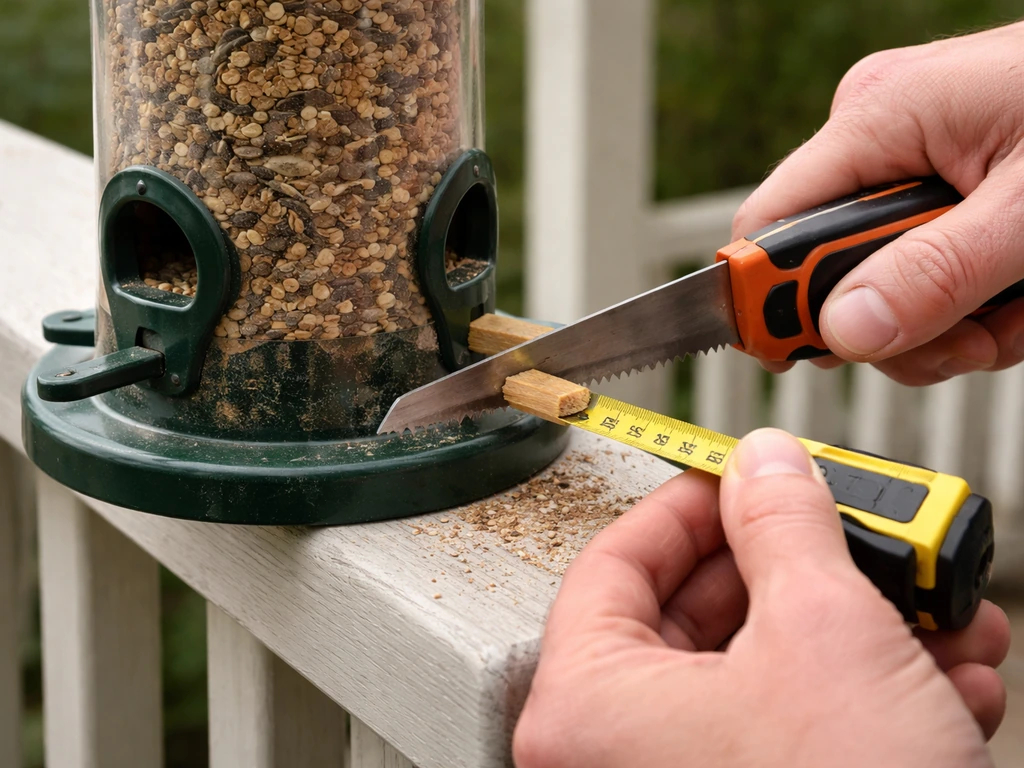
You do not necessarily need to buy a new feeder. These steps work on most standard feeders you already own.
- Shorten or remove the perches. Unscrew or cut standard wooden or plastic perches down to 0.75 to 1 inch. Small songbirds cling to the port edge anyway. Pigeons need more than 2 inches of perch to stabilize. This one change alone will reduce pigeon time at a tube feeder by 50% or more.
- Add a cage surround. Hardware cloth (welded wire mesh) with 1.5-inch square openings can be formed into a cylinder around a tube feeder. Use hose clamps or zip ties to hold it 3 to 4 inches away from the feeder surface. This is the DIY version of a commercial caged feeder and costs about $10 in materials.
- Install a baffle below the feeder. On a pole-mounted setup, thread a torpedo or cylinder baffle onto the pole before raising the feeder. The baffle should sit at roughly 4 feet off the ground. On a hanging feeder, a dome baffle above the hook also limits approach from above and provides weather protection.
- Remove or shrink the seed tray. If your hopper or tube feeder has a wide catch tray, unscrew it. If it is integrated into the feeder body, fill the outer edges of the tray with a foam or wood insert to reduce usable standing width to under 1.5 inches.
- Switch to a hanging system on thin wire or monofilament. Replace chain or rope hangers (which pigeons can grip) with 20 lb monofilament fishing line. Pigeons have real trouble landing on or gripping monofilament, and the extra sway it introduces deters them further.
- Reposition the feeder away from launch points. Pigeons typically land from an adjacent surface. Move your feeder so it is at least 8 feet from any fence, roof edge, tree limb, or railing. Hanging feeders should be at least 5 feet from any structure.
- Reduce ground spillage immediately. Fit a seed catcher tray (with drainage holes) under a tube or hopper feeder to catch fallen seed, then collect and dispose of that seed daily rather than letting it pile up. Less ground seed means fewer pigeons drawn into the yard in the first place.
Feed and Setup Tweaks That Actually Reduce Pigeon Visits
What you put in the feeder matters as much as how it is built. Pigeons are generalist feeders but they do have preferences, and you can use those against them.
| Seed or Food | Pigeon Interest | Good For (Instead) |
|---|---|---|
| Safflower seed | Low — most pigeons avoid it | Cardinals, house finches, chickadees |
| Nyjer (thistle) | Very low — too small and fiddly | Goldfinches, pine siskins |
| Striped sunflower (in shell) | Low to moderate — hard shell is a deterrent | Cardinals, blue jays, nuthatches |
| Black oil sunflower | Moderate to high — easy to eat | Wide range; use in caged feeder only |
| Mixed seed blends with millet | High — millet is a pigeon favorite | Avoid in pigeon-prone areas |
| Cracked corn | Very high — top pigeon attractor | Avoid entirely if pigeons are a problem |
| Peanuts in shell | Moderate | Use in caged or enclosed feeders only |
The cleanest switch you can make right now: dump any mixed seed blend and fill your feeder with straight safflower. Cardinals, house finches, and chickadees will come to safflower readily. Pigeons will largely ignore it. You will see a noticeable drop in pigeon pressure within a few days of the switch.
On placement: height matters but clearance matters more. A feeder at 6 feet high but 3 feet from a fence is easier for pigeons to access than a feeder at 4 feet high with 10 feet of clearance in every direction. Think about the approach vectors: where would a pigeon land before trying to reach your feeder? Eliminate those staging spots and you cut off the behavior before it starts.
Also think about how much seed you load at a time. Overfilling a feeder leads to more spillage when birds jostle it. Fill feeders to about 75% capacity and refresh more frequently rather than loading them full and walking away for a week. This also keeps seed fresher and reduces mold, which is a win on multiple fronts.
Troubleshooting: What Pigeons Exploit and How to Fix It
If you have already made some changes but pigeons are still getting in, here is a breakdown of the most common failure points. Insect.com’s site was not found to provide authoritative, tube- or hopper-specific documentation of pigeon entry routes based on exact feeder-side gap mechanisms, indicating that more targeted sources are needed for that level of detail not provide authoritative, tube- or hopper-specific documentation of pigeon entry routes based on exact feeder-side gap mechanisms.
They Are Still Landing on the Feeder
If pigeons are physically landing on the feeder body or cage, the cage mesh is too large (use 1 to 1.5 inch maximum) or there is a flat surface they are using as a landing pad. Check the feeder top, seed tray edges, and any integrated roof. Even a 2-inch-wide roof lip is enough for a pigeon to grip briefly and reach down. File it down, add a slick plastic dome over the top, or switch to a feeder with a peaked roof that offers no flat surface.
They Are Eating from the Ground Below the Feeder
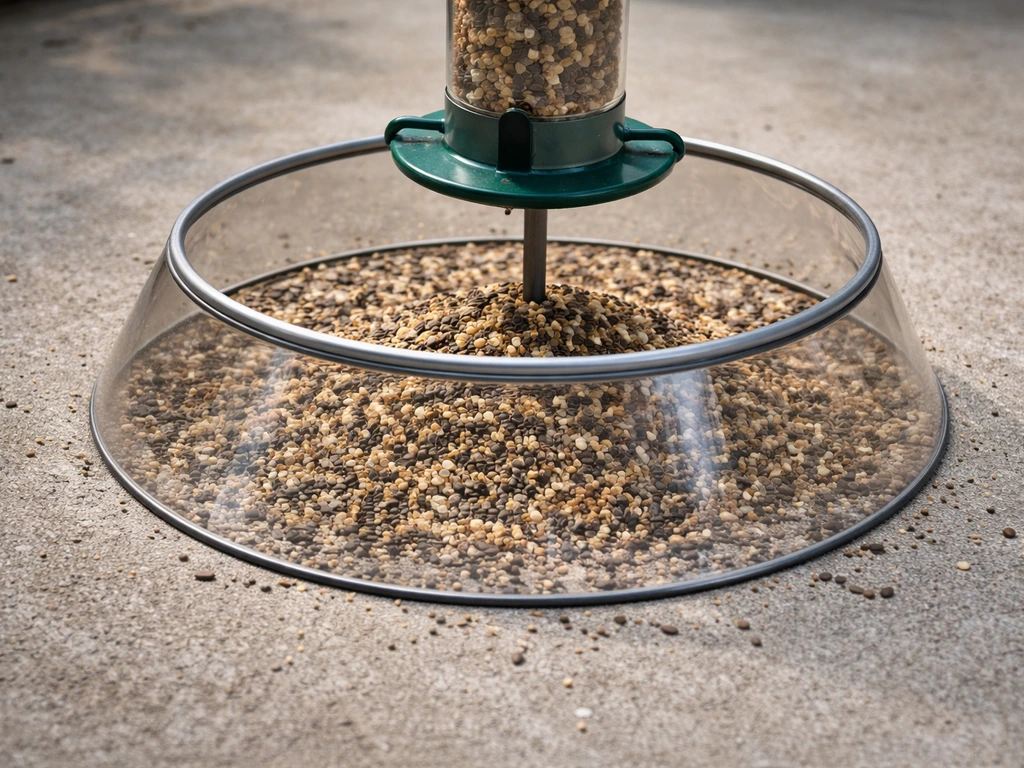
This is the most persistent failure mode and the one most people underestimate. A pigeon-proof feeder above ground means nothing if there is a seed pile below it. Install a no-mess seed catcher, switch to no-waste seed (shelled sunflower hearts, nyjer, or safflower), and clean up spilled seed every day. If you want the best no mess bird feeder setup, pair that catcher with no-waste seed like safflower or shelled sunflower hearts and keep the area spotless no-mess seed catcher. If ground-level pigeon pressure is severe, temporarily move the feeder to a different location in the yard so the pigeons do not keep returning to the same spot out of habit.
The Weight-Sensitive Mechanism Is Not Triggering
On spring-loaded weight-sensitive feeders, the threshold is adjustable via a tension screw. If pigeons are eating without triggering the closure, the spring is set too heavy. Dial the tension down in small increments until a 9 to 13 oz weight (pigeon range) triggers the shroud. Test it with a kitchen scale and a small weight before relying on it. Also check that the shroud moves freely and has not been jammed by dirt, rust, or frozen seed debris.
They Are Getting In from the Side of a Caged Feeder
If your cage surround has openings larger than 1.5 inches, a pigeon can insert its head and sometimes partial body to reach the seed ports. This happens most with cheaper caged feeders using wide decorative wire patterns. The fix is to add a layer of hardware cloth with 1-inch openings over the existing cage, or replace the cage entirely with a properly spec'd model. A pigeon's head is roughly 1.5 inches wide, so 1-inch mesh is the reliable cutoff.
Pigeons Are Dominating the Approach and Scaring Off Small Birds
Even when pigeons cannot physically access a feeder, a group of them perching nearby can intimidate smaller birds and prevent them from visiting. This is a behavioral dominance problem rather than a physical access problem. The fix is multiple feeding stations spread far apart (at least 10 feet between feeders), which forces pigeons to split up and gives small birds a quieter station to use. Placing small bird feeders in denser shrub cover (where pigeons are uncomfortable maneuvering) also helps. Pigeons strongly prefer open sightlines and easy landings, so dense vegetation near the feeder works in your favor.
Your Baffle Is Not Working
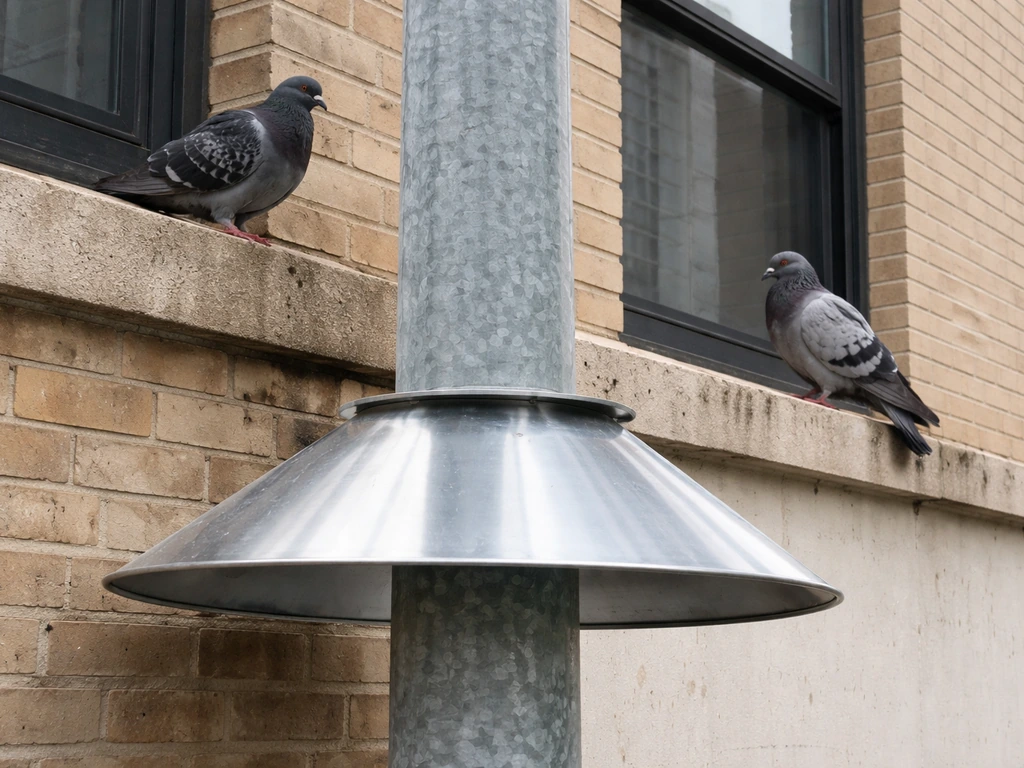
A baffle fails when it is mounted too low (leaving accessible pole above it), when the pole is close enough to a structure that pigeons bypass the baffle entirely by landing from the side, or when the baffle diameter is too small. For pigeon pressure, use a cylinder or torpedo baffle at least 18 inches long and 6 inches in diameter. Mount it so the top of the baffle is at least 4.5 feet off the ground. Make sure there is no nearby fence, branch, or structure within 8 to 10 feet that a pigeon can use to launch over the baffle.
Picking the Right Approach for Your Setup
If you are in a dense urban area with heavy pigeon pressure, the caged tube feeder on a pole with a torpedo baffle, filled with safflower or nyjer, is the most reliable combination. If you want the best rat proof bird feeder, focus on a setup that blocks access from every angle, not just pigeon openings caged tube feeder.
Even though this guide focuses on pigeons, the same enclosure, port, and baffle ideas are the foundation for finding the best starling-proof bird feeders too best starling proof bird feeders. A best deer proof bird feeder can also help protect your feeding setup from browsing or curious wildlife around your yard.
If you want the best grackle proof bird feeder, start with a caged tube style setup like this and pair it with the right baffle and seed so larger birds cannot get a grip caged tube feeder. If you are dealing with rats, look for bird feeders that are rat proof by using a fully enclosed design, a sturdy wire cage, and a baffle that prevents animals from reaching the seed ports. To deter rats, choose bird feeders that are truly rat proof, with a fully enclosed design and seed ports animals cannot reach bird feeders that are rat proof.
It handles pigeons at every access vector: physical body exclusion via the cage, approach exclusion via the baffle and clearance, and dietary exclusion via unappealing seed.
If you are in a suburban yard with occasional pigeon visits, the perch-shortening plus safflower switch is often enough on its own and costs almost nothing. Give it a week before adding more hardware.
If you already have a feeder you love and do not want to replace it, the DIY cage surround from hardware cloth is your best friend. It preserves the feeder you have, costs under $15, and can be removed if you move or change setups. Pigeons are persistent but they are not clever: once access is genuinely blocked and the seed below is cleaned up, they will move on to easier food sources and leave your yard to the birds you actually want. A best deer proof bird feeder also helps when larger visitors can reach the feeder or knock it loose.
FAQ
If I buy the “best pigeon proof bird feeder,” how long will it take for pigeons to stop showing up?
To reduce pigeons fast without buying a new feeder, switch the seed to straight safflower (no blends) and cut access points first, then clean up any spilled seed daily for 3 to 5 days. Even a fully cage-based feeder will still draw pigeons if there is a reliable food pile under it.
Will a caged tube feeder still fail if the cage mesh looks “small enough” at first glance?
Yes, if the cage/shroud openings are larger than the port spacing or the mesh is too open, pigeons can reach in. For caged tube setups, stick to the smaller opening guidance (about 1 to 1.5 inch max for cage opening sizing) and avoid decorative wire patterns with wide gaps.
What is more important for pigeon proofing, feeder height or clearance from nearby surfaces?
Do not rely only on height. A feeder at 6 feet can still be easy if there is a fence, roof edge, tree branch, or railing within a short landing distance, because pigeons can approach from the side and bypass a baffle. The practical test is to stand where a pigeon could land and check whether it can reach the feeder area from that spot.
My weight-sensitive feeder closes sometimes but pigeons still get seed. What should I adjust first?
If pigeons are triggering closures inconsistently, reduce the spring or weight threshold in small steps and confirm the shroud fully moves without sticking. Also check that the feeder is level and that dirt or frozen seed debris is not creating friction that prevents the closure from engaging at the right weight.
How do seed type and “overfilling” change the effectiveness of pigeon proof feeders?
Avoid dispensing strategies that create a secondary buffet. Do not dump large refill loads and do not leave mixed seed on the ground for “cleanup later,” because jostling will produce a spread pattern. Use no-waste seed (like safflower or shelled sunflower hearts) plus a seed catcher, and refresh frequently to prevent buildup.
What are the most common DIY mistakes that make an otherwise good feeder still attract pigeons?
Caged tube feeders can be pigeon-resistant, but if the cage clearance is too tight or the ports are oversized, pigeons may still shake seed loose. Also inspect the top area for any flat roof lip or ledge that gives a pigeon a landing point, then file, replace, or add a smooth slick cover.
My feeder is blocked, but smaller birds still won’t come. How do I fix the dominance or intimidation problem?
If pigeons can perch nearby and intimidate smaller birds, you may need to change feeding geography rather than feeder construction. Place multiple feeding stations farther apart (around 10 feet between stations), or locate feeders deeper into shrub cover so pigeons have fewer comfortable landing options.
How can I tell if my baffle is the real weak point?
A torpedo baffle can fail if it is too short, too narrow, or mounted too low relative to the feeder. Use a baffle with adequate length (about 18 inches or more) and diameter (about 6 inches), and ensure the top sits at roughly 4.5 feet or higher, with no launch surfaces within about 8 to 10 feet.
Can I pigeon-proof a hopper or platform feeder without replacing it entirely?
Yes. Platform and hopper designs often create a large, stable landing area and shallow access routes. If you cannot switch away from a hopper or platform, add a properly designed cage/shroud that restricts landing and consider shifting to seeds pigeons largely ignore (like safflower) to reduce repeated visits.
How do I know if pigeons are accessing through the cage openings versus through the baffle or seed spillage?
If pigeons are reaching the ports from outside a caged feeder, the cage openings are likely too large or the cage is poorly spaced from the tube, letting them extend part of the body. The quickest diagnostic is to look for head insertion or partial access marks, then reduce opening size with hardware cloth or replace the cage surround with a correctly spec’d unit.
What should I do when pigeons keep returning to the same spot even after I improve the feeder?
If pigeons keep returning, the yard location may have become a habit spot with reliable scavenging. Temporarily move the feeder to break the routine, while you continue daily cleanup under the old location, then reintroduce the feeder once the area stays seed-free.
What’s the most reliable combination if I’m dealing with heavy pigeon pressure near the feeder?
If you live in a dense urban area with heavy pigeon pressure, the most reliable baseline is a caged tube feeder on a pole paired with a correctly sized torpedo baffle and unappealing seed (safflower or nyjer). For maximum protection, treat approach vectors and access from every direction, not just the feeder ports.
Next Article
Best Dove-Proof Bird Feeders: Prevent Waste and Pests
Best dove-proof bird feeders: choose dove-resistant features, stop seed waste and pests, and fix feeders that still fail